


Abruzzo
Travel Guide
Everything you need to know
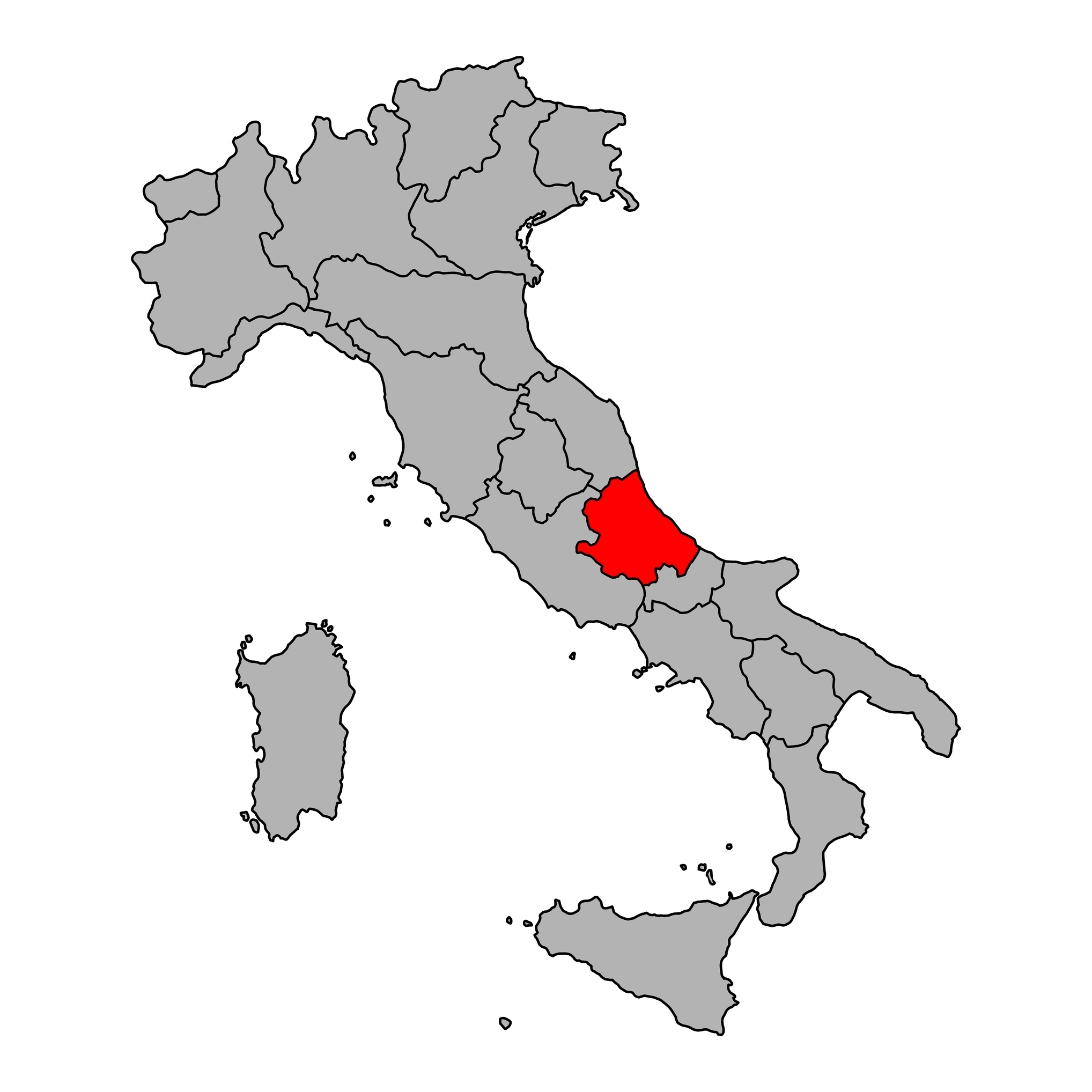
Where is Abruzzo
Located almost centrally on the eastern coast of Italy, Abruzzo shares borders with Marche to the north, Molise to the south and Lazio to the west. The region is divided into a further four provinces: L’Aquila, Teramo, Pescara and Chieti. Each have their own unique characteristics.
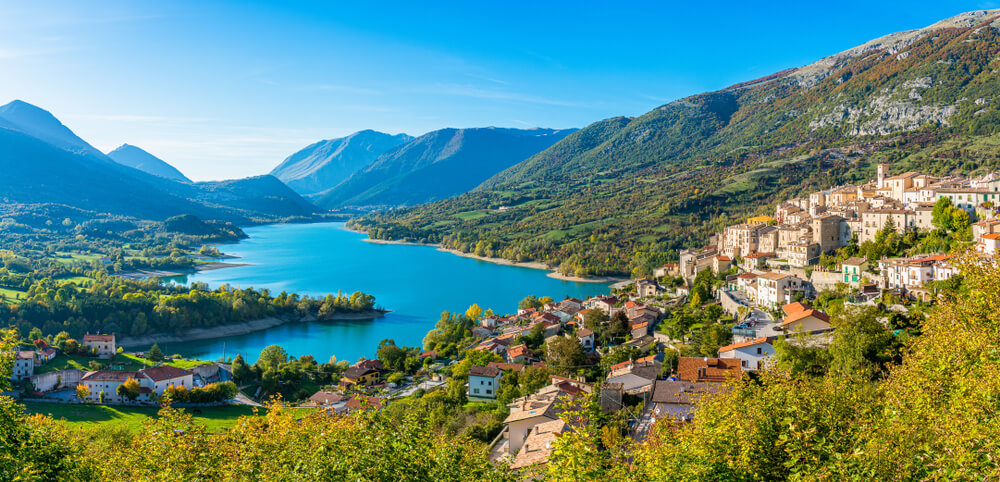
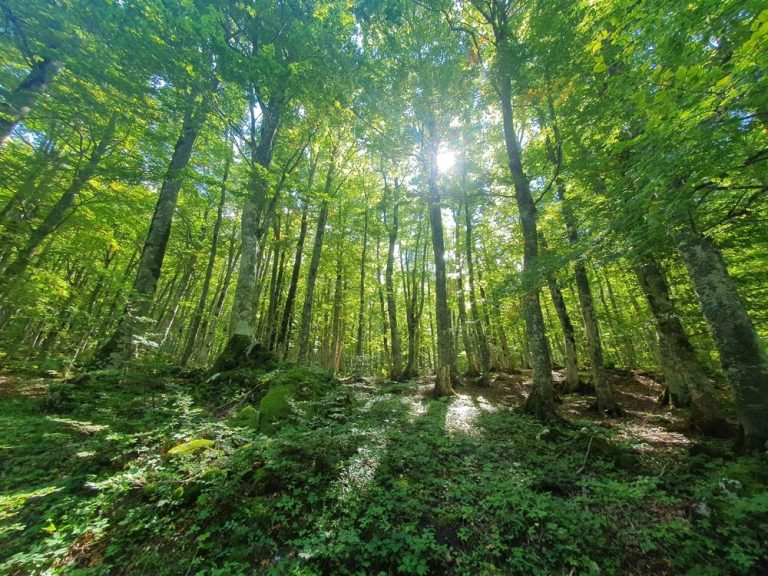
While Abruzzo boasts some spectacular beaches on its eastern coast, the region is probably more famous for its inland scenery. With nearly half of the region protected by 3 national parks, 1 regional park and 38 nature reserves, Abruzzo has earned itself the nickname of the greenest region in Europe. These parks are home to 75 per cent of Europe’s animal species. This makes Abruzzo the perfect holiday destination in Italy for nature lovers.
How to get there
Despite being a route less travelled by most visitors to Italy, getting to Abruzzo is surprisingly easy.
By Plane
Abruzzo’s international airport is in Pescara (PSR). There are regular flights from many European hubs such as London, Paris and Brussels. The airport is served well with cost effective travel options from Ryanair, Whizzair and Air Malta.
If you’re arriving from further afield, then you will need to take a connecting flight. Air Malta offers regular direct flights from Milan which is probably the best option. Flight time is about 1 hour and 20 minutes.
For the most up to date information visit the Abruzzo Airport website.
Another option is to fly into Rome and take a train or bus from there. The journey from Rome by both bus and train takes about 4 hours. More information on buses can be found on the Flixbus website and for trains visit Trenitalia.
By Train
Italy is, without doubt, one of the most rail-friendly countries in the world. Using the fast train service from Rome, you can be in Pescara in just over four hours. It’s even less than this from Bologna. If travelling from Milan, the direct high-speed trains take just under seven hours, but bear in mind that the journey is actually quicker if you make a change in Bologna.
Good train links throughout Europe mean you can even travel to Abruzzo by train from the UK. Take the Eurostar from London St Pancras to Paris, then onto Milan and finally to Pescara. The trip is not to be taken lightly though – it will take around 21 hours from start to finish. But you could of course, stop en route to break up the journey.
Find out all train times, prices and book tickets to Abruzzo at Trainline. Or find out more about train travel in our useful guide to travelling by train in Italy.
By Car
If you are coming to Abruzzo by car and driving from the north, then take the A14.This road hugs the eastern coastline of Italy and connects Bologna with Pescara. Alternatively, you could travel from Rome on the E80. This road cuts through some stunning countryside as it travels from east to west.
Italy does have a good road network and travelling by car tends to be easy and efficient. If you’re looking to get from A to B quickly, then it’s worth using the Italian Autostrada whenever possible. These are fast roads but you do have to pay to use them. Toll booths will either require immediate payment or ask you to take a ticket, in which case payment will be made when you exit the motorway. Payment can usually be made using either a credit card or in cash. Just make sure you choose the correct lane – telepass or biglietto. The telepass is a device that will automatically deduct the toll from your bank account. The likelihood is that you won’t have one of these so instead you should opt for taking a ticket (biglietto). You can check the official Autostrada website for more details and for guidance on routes and journey times.
By Boat
Despite having about 150 kilometres of coastline, there aren’t any commercial international ferries that serve the region. However, the port city of Ancona, in neighbouring Marche, is a major hub for passenger ferries and it’s just 150 miles from Abruzzo.
That said, there are regular ferry services into Ancona from Greece, Croatia, Montenegro and Albania. All of these routes offer the option of travelling as a foot passenger (always cheaper) or to bring your car or camper. Some of these journeys can be quite slow. The ferry from Patras in Greece takes about 22 hours. However, the trip from Zadar in Croatia is just 7 hours.
Ferry Scanner is a great website to compare routes and prices.
By Bus
Like in most Italian regions, long distance bus or coach travel to Abruzzo is best booked with FlixBus. Rome is the most obvious hub to travel from with journey times to Pescara, Chieti and Teramo taking just over 2 hours. The trip from Rome to L’Aquila is just 1 hour and 20 minutes. Travelling by coach to Abruzzo is efficient, thanks to its good road links and it is also a cost effective option.
How to get around Abruzzo
Once you have arrived in Abruzzo, you have a few options for how to get about during your holiday. We do definitely recommend hiring a car – it will give you so much more freedom and allow you to explore parts of Abruzzo that may be hard to reach using public transport. However, it’s good to understand all the options to explore the region.
Public Transport
If you’re arriving into Pescara airport, then it’s just 4km from the city centre. This is an easy bus ride (number 8 or 38) or an even easier taxi ride. There aren’t any trains from the airport, but beyond that Abruzzo is fairly well served by a good regional rail service. Like in most of Italy, trains between major towns and cities in Abruzzo are efficient and usually offer great value for money.
The star of the show is the coastal route which runs from Vasto up to Pescara. Although L’Aquila is the official capital of the region, Pescara acts as the main rail hub with plenty of high speed intercity trains to Milan, Rome, Venice and Bologna. Pescara Centrale is also a key stop on the Adriatic railway line which runs the length of Italy’s eastern coast. This is a stunning route with an embarrassment of majestic coastal vistas. While the trains aren’t exactly high speed, to be honest you wouldn’t want to rush this journey and miss out on the beautiful views.
Travelling by bus in Abruzzo will allow you to discover a more authentic off-the-beaten-track side to the region. Almost every town and village has some kind of service, although we should warn you that in more rural areas these can be a little sparse. Opting to travel by bus in Abruzzo is also a budget friendly way to see the region.
There is no national bus network in Italy. Most buses are regional. And, even within the same region, there can sometimes be multiple companies operating. This is certainly the case in Abruzzo, where there are a number of public and private bus companies.
Tuabruzzo is the largest provider of local bus services. Timetables can be viewed here. There is also Tuabruzzo app which can be downloaded in advance of your trip. This is useful for buying and storing tickets in advance. Additionally, in L’Aquila, AMA (L’Aquila Mobility Company) offer local routes in and around the city. And in Pescara, Satam also operates routes from the city north into Marche.
Although the setup for using buses in Abruzzo may seem fairly slick online, in our experience it is not always the ideal option for holiday travel. Expect delays and if you happen to be travelling on a public holiday or feast day then you can expect a significantly reduced service, or in some cases, no service at all.
Renting a car and driving
There are a number of benefits to driving a car in Abruzzo. Not least, it allows you to explore Abruzzo at your own pace. It also enables you to fully discover Abruzzo’s picturesque rural landscape and its smaller hilltop towns and villages. Expect to enjoy breath-taking panoramas around every corner! The airport in Pescara is well served by both international and local car rental companies.
There are six types of roads in Abruzzo – the motorway (autostrada), the state roads (superstrada), the regional roads (strade regionali), the provincial roads (strade provinciali), municipal roads (strade comunali) and strade bianche. These are white gravel roads, often found in rural areas. It can often be that the final approach to your Abruzzo villa rental will be along one of these strade bianche.
The main motorway from Rome to L’Aquila is the A24. This is by far the most efficient route to take to your Abruzzo villa rental if you are flying into one of Rome’s airports. Just after you cross the border into Abruzzo, the road splits and you can take the A25 if you’re heading to Pescara or another coastal location. Again this is an efficient route and if time is of the essence then it’s definitely the best option.
However, we don’t always recommend using the motorways when travelling around Abruzzo. Much of the region’s beauty is hidden in the lush valleys and hidden hilltop towns and villages. Using provincial roads will take longer to get from A to B but if you have time, you will most certainly be rewarded with magical views and have the chance to experience authentic Italy at its best. One of our favourite routes links the stunning Gran Sasso and Manjella Masif mountain ranges. Despite the high altitudes, these roads meander in a much more gentle fashion than those in Liguria or Tuscany. Fewer hair pins bends and hair raising moments make this a beautiful drive.
Although we do love driving in Abruzzo, there are a couple of caveats to be aware of. The first is that much of Abruzzo is rural. As a result, on smaller roads, you should be prepared to encounter slow-moving agricultural vehicles as well as tiny ape (three wheeled utility vehicles). The narrow roads mean it’s not always possible to overtake. Instead, just relax and enjoy the view and the slower pace!
Drivers should also be aware of Zona Traffico Limitato (ZTL). These restricted traffic areas prohibit non-resident vehicles from entering. Expect a ZTL in any of Abruzzo’s bigger towns and more popular tourist villages. These include L’Aquila, Pescara, Chieti, Sulmona, Lanciano, Citta Sant’ Angelo, Pratola Peligna and Teramo.
The aim behind ZTLs was to reduce pollution and limit damage to streets and buildings in the historic centres. However, they have also managed to create a much nicer experience for those exploring these historic centres on foot. The ZTL tend to be active during certain hours so you need to read the signage carefully. Also be aware that this can sometimes change from day to day as some signs are now digital.
Every entrance to a ZTL will be clearly signed indicating that you are entering a restricted traffic area. These signs consist of a white circle with a red border on a white background. The words Zona a Traffico Limitato is clearly written above the circle, whilst below there will be information regarding the timing that the restrictions are in place. For example, a sign stating 8.00 – 20.00 would indicate that the restrictions are in place between 8 o’clock in the morning and 8 in the evening. Your rental car will not have a permit to access these areas. Nor will your own vehicle. The only exception will be if you have booked accommodation within a ZTL and your Abruzzo villa or hotel provider has already informed you that you are able to enter the area and have already taken a note of your car registration plate. If in doubt, check with them before entering.
ZTL entrances are marked by security cameras. These will immediately record your registration number. If you enter, a fine will be issued should you be breaking the restrictions. In fact, you can be fined multiple times – each time you pass a security camera, you can get a new fine. Since fines can be up to €300, it’s a costly mistake to make! Don’t think it’s OK to enter if you happen to see other vehicles inside the area either. Residents are normally allowed to enter as is public transport. And don’t be fooled by what your GPS or SatNav system might be telling you to do. They don’t always inform you that you’re entering a restricted traffic zone.
By Bike
Nearly a third of Abruzzo is protected as a classified nature reserve or national park. So cycling in Abruzzo is a clean air paradise. Forget the crowded pelotons of Tuscany and the Dolomites – the Abruzzo cycling scene is pretty much undiscovered. The region offers a true variety of terrains from steep mountain climbs to meandering coastal paths. In short, if you like cycling, you’ll love cycling in Abruzzo.
For riders seeking a challenge, the routes in Gran Sasso and Monti della Laga National Park are Abruzzo’s crown jewel. The climb to Campo Imperatore, rises to over 2,100 metres and has featured in the Giro d’Italia. Expect sweeping hairpins, wild horses grazing on alpine meadows and scenery that sometimes feels otherworldly. Be sure to bring some layers. At these altitudes, even in the Summer it can feel chilly.
If you prefer sea breezes to mountain air, opt for the Costa dei Trabocchi cycle path. Formerly a railway line, the route runs for nearly 50 km along the Adriatic coast between Ortona and Vasto. It’s flat, scenic and punctuated with trabocchi. These are traditional fishing huts now transformed into seaside restaurants and the perfect place for a pitstop. Our friends at Passucci Travel offer some excellent cycling tours and can create a completely bespoke experience, perfect for any group size and ability. Contact Max and his team for more information.
Atessa
Introduction to Atessa
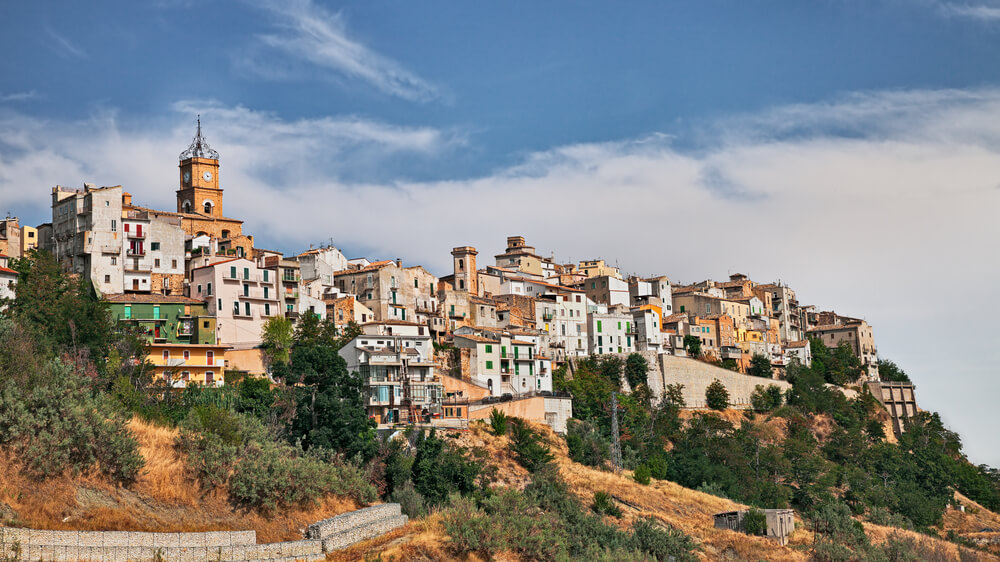
Atessa is a hilltop town that sits gracefully on a ridge between the Sangro and Osento valleys, 453 metres above sea level. Originating on the hilltop itself, it has expanded down the hillsides over time. Atessa is also one of Abruzzo’s most atmospheric hill towns, a place where medieval streets, panoramic vistas and slow-paced village life come together in a way that feels unmistakably authentic. Quieter than Abruzzo’s coastal cities, Atessa’s historic centre is a web of narrow lanes and honey-coloured stone buildings. The surrounding countryside provides an idyllic backdrop of rolling hills, vineyards and olive groves.
For the best views of the surrounding area, head to the Piazza Oberdan (Piazza della Fontana). As well as being home to a striking fountain by Giò Pomodoro, it also provides the most sweeping views of the Sangro Valley, Adriatic Coast and Majella Mountains.
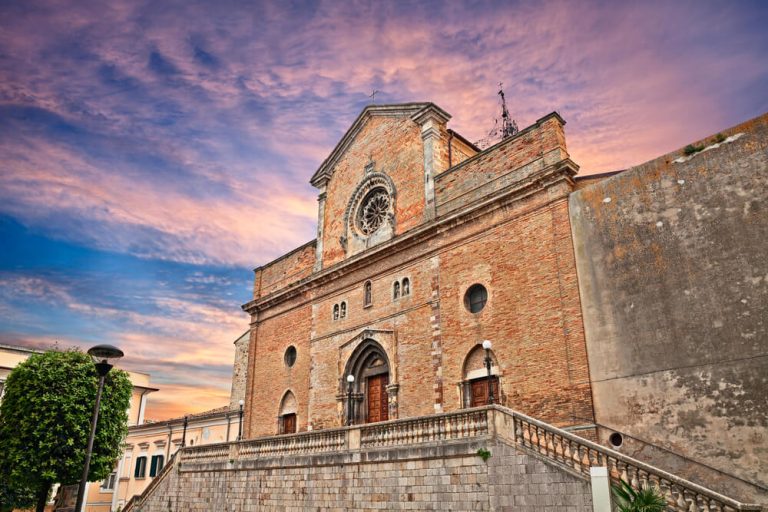
The most prominent landmark in Atessa is the monumental Cattedrale di San Leucio. Legend has it that Saint Leucio once slayed a dragon, and the cathedral still proudly displays one of the dragon’s ribs. Around the cathedral are a cluster of palazzi and small museums which preserve the stories, craftsmanship and religious traditions of this corner of Abruzzo.
There are also a number of interesting museums in Atessa worth visiting. These include Atessa include the Nativity Scene Museum (Museo del Presepe), the Aligi Sassu Museum and the Museum of Ancient Crafts (Museo degli Antichi Mestieri).
Tips for navigating the city
Atessa is compact, but its hilltop nature means that exploring inevitably involves some steps and inclines. We suggest you park below the historic centre and walk upwards. Don’t worry – the climb is steady rather than strenuous, and once you’re in the centre, everything is easily reached within a few minutes on foot.
Driving inside the oldest part of the town is limited and not always straightforward. Several streets are narrow or one-way, so it’s generally easier to explore by foot. If you do drive in, look for marked parking areas around the perimeter of the centre.
Incidentally, for one of the most scenic ways to reach Atessa, head there by bike along the scenic ridge from Torino di Sangro to Atessa.
Accommodation and dining recommendations
If staying overnight in Atessa, there are a handful of hotels in Atessa. However, you may also want to consider Villa Pia, a stunning 2 bedroom apartment in the heart of the town, which boasts a private terrace overlooking the main square.
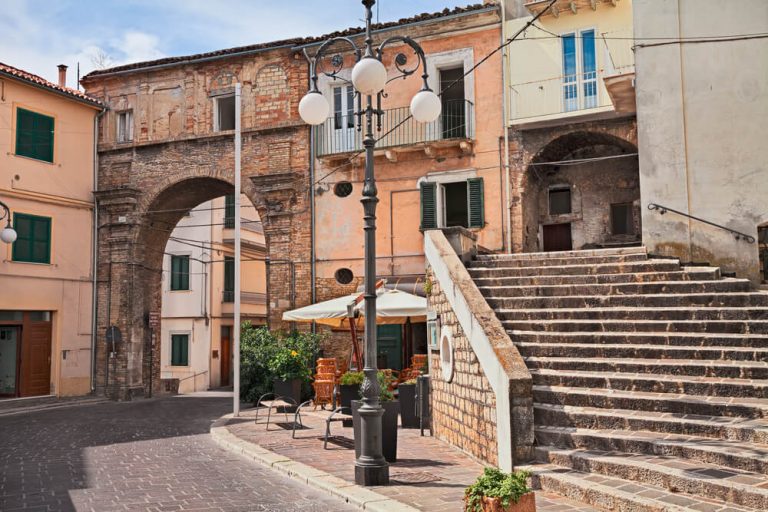
Like so many of Abruzzo’s towns, there are plenty of opportunities to sample some of the region’s local produce in Atessa. Head to Piretti 1779 to enjoy their liqueurs and nougat, make your way to Iacovanelli to try their world-famous honey and stop at Frantoio Gentile to savour their delicious olive oil.
We can also highly recommend the aperitivi at Uvarara in Atessa. Wine lovers will rejoice in the fantastic selection of wines on offer but they also serve up great cocktails too. Order a plate of salumi e formaggi to accompany them.
Avezzano

Introduction to Avezzano
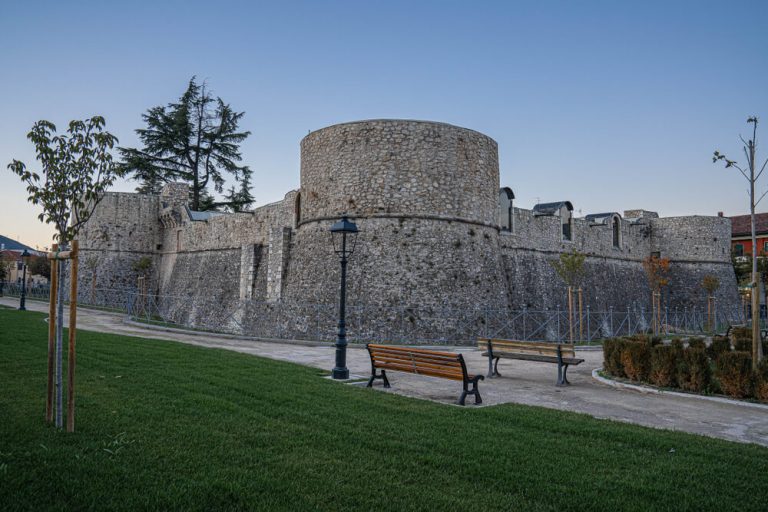
Avezzano has a very different feel to Abruzzo’s hilltop towns. Sitting in the expanzive Marsica plan, it is a lively, modern town characterised by broad boulevards and elegant squares, all with the backdrop of the mountains behind. Much of the town was destroyed by a devastating earthquake in 1915 so what you see today dates from after that. The exception is the Castello Orsini, a fifteenth century fortress which survived not just earthquakes but also two world wars. Set behind a now empty moat, it has an imposing yet elegant quadrangular layout, with high inclined walls and four reinforced circular towers. Once serving a crucial defensive role, it is now used for exhibitions and concerts.
Near to this sits the Museo di Palazzo Torlonia. This museum tells the story of how Lake Fucino (once Italy’s third largest lake) was drained in the nineteenth century to create the fertile plains that now surround the town.
Tips for navigating the city
The layout of Avezzano makes is exceptionally easy to explore on foot. Its centre is both compact and flat and designed with pedestrians in mind. Its parks and wide avenues provide pleasant places to enjoy an evening passeggiata.
If coming by train, the station is just 600 metres from the Piazza Risorgimento which is the central square in Avezzano. However, it’s actually straightforward for drivers coming by car too. Parking is generally much easier than in many Abruzzo towns, with a mix of free and paid bays around the centre.
Once in Avezzano, its main sights – the cathedral, castle and piazzas – are all within a short walk of one another.
Accommodation and dining recommendations
If staying overnight, you can opt to stay in a hotel or B&B in Avezzano. As elsewhere in Abruzzo, a tourist tax applies depending on the type of property. For those seeking more space and tranquillity, the countryside surrounding Avezzano, especially towards Massa d’Albe or the foothills of the Velino mountains, is dotted with charming Abruzzo villas and rural retreats.
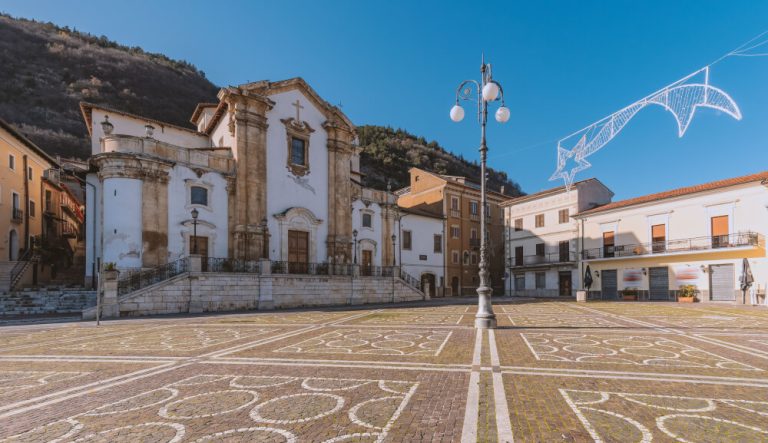
If you want to sample some typical Abruzzese cooking, then our favourite restaurant in Avezzano is Osteria Mammarossa, Famous for its creative and beautifully presented dishes, the team here have a passion for sharing their love of food and also have a cookery school to teach you how to rustle up equally delicious dishes at home.
Or, for the best sweet treats and gelato in Avezzano head to Pasticceria Exclusive. Opt to try the ciambelle (sweet, ring-shaped doughnuts) for breakfast and you won’t be disappointed!
Chieti
Introduction to Chieti
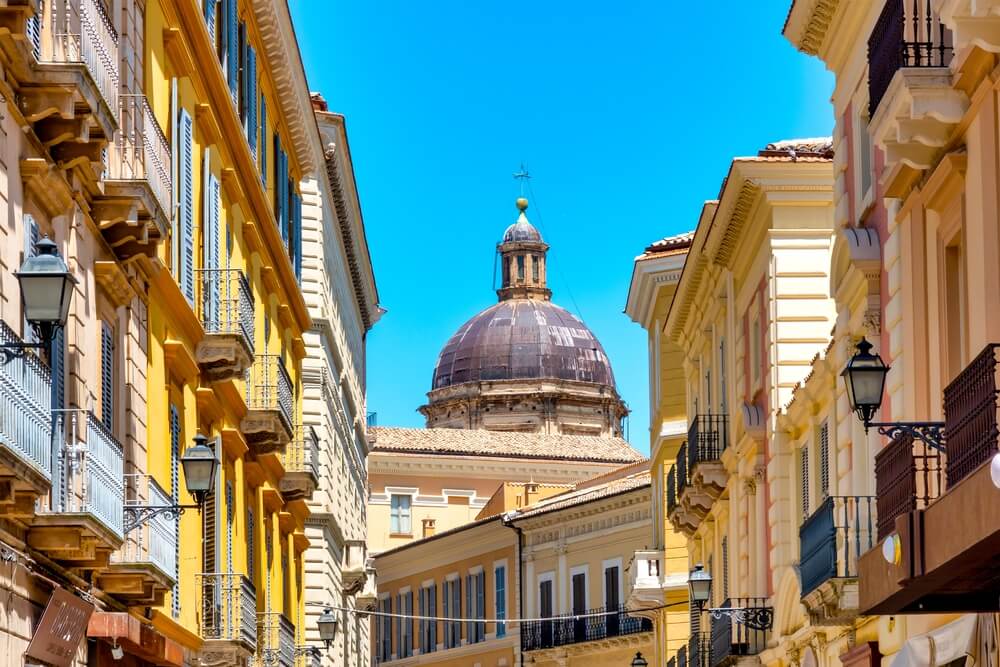
Inland from the coast but still not yet in the heart of Abruzzo’s mountains, Chieti is one of the region’s most visited cities. Chieti is actually split into two almost separate towns: Chieti Scalo and Chieti Alto. Chieti Scalo is the modern part of the city, home to the train station, most residential areas and the university. In contrast, Chieti Alto, perched on the hilltop above, is home to the city’s historic centre and some of the most spectacular views of the Abruzzo countryside.
Most visitors skip Chieti Scalo unless they have a practical reason to be there, such as the train station, and we think this is good advice. There is a funicular which links both parts of Chieti and makes the journey between them both easy to make. However, Chieti Alto is where you want to spend your time. Here you will discover winding alleyways and ancient piazzas that reveal the city’s layered history which dates back to Roman times.
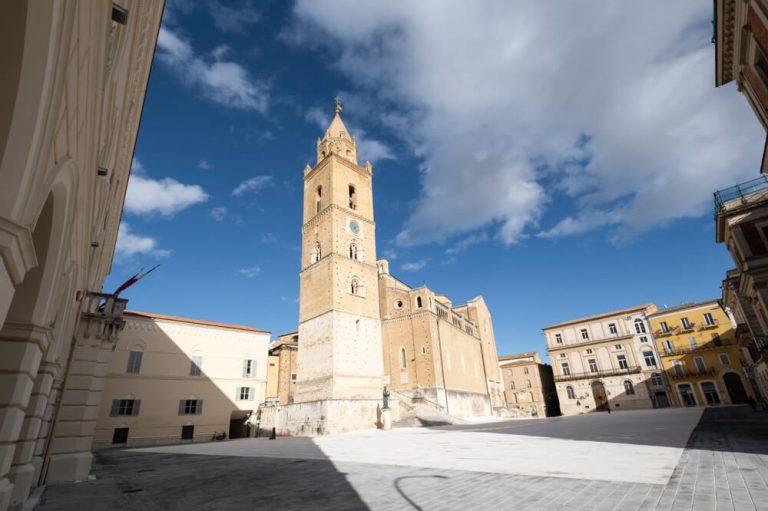
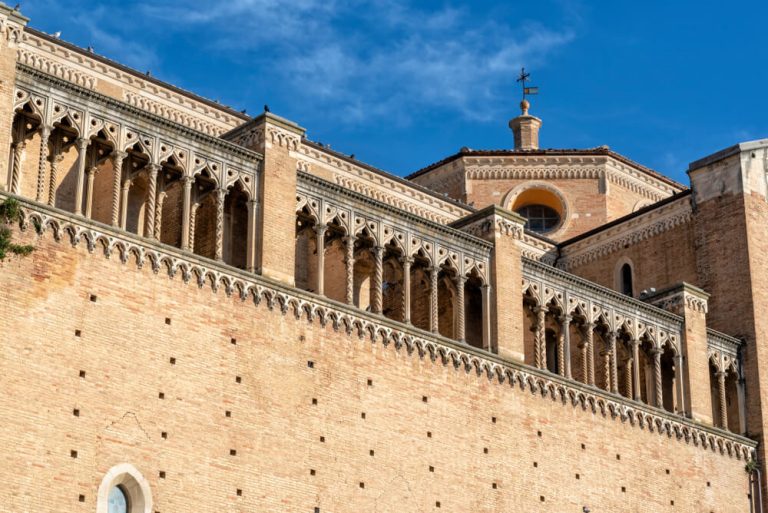
Once called Teate Marrucinorum, there is still plenty of evidence of the ancient city that predated modern day Chieti. Highlights are the amphitheatre and temple ruins. Both are well worth a visit. The Cattedrale di San Giustino is also a must see sight with its crypt dating back to the 9th century. Here you’ll also find the Piazza San Giustino, often referred to as the heart of Chieti. Bustling bars and trattorias spill out onto the square. It’s the perfect spot for some people watching or an evening aperitivo.
We would also recommend a visit to the Museo d’Arte Costantino Barbella. Almost hidden inside an impressive 18th century palace, this gallery showcases much of the region’s finest sculptures and ceramic art. Slightly off the main tourist trail, a big bonus is that there is no entrance fee.
Finally, Chieti Alto’s position on the hillside makes it home to some incredibly breathtaking views of the surrounding countryside. It’s often noted that Abruzzo is the greenest region in Italy. However, we are always blown away by the range of shades of green we find in Abruzzo. To describe it as a rainbow of greens would be no exaggeration and Chieti offers one of the finest vantage points from which to enjoy it.
Tips for navigating the city
Assuming that you will spend your time in Chieti Alto, the old town is small enough to explore entirely on foot. The funicular railway makes the trip from Chieti Scalo incredibly easy and it operates all year round. Just a word of caution. The streets and alleyways are narrow and often unevenly paved or cobbled so comfortable shoes are a must.
Some brave cyclists make the journey up the hill on two wheels but heed our warning that the climb is not suitable for a novice. The incline is relentlessly steep. However, once you’re at the top the views will be forever rewarding.
If you choose to drive to Chieti Alto then there is a large car park just outside of the centre and ZTL – Parcheggio Piazza Garibaldi – but we recommend you double check this is open prior to travelling. For example, on Tuesdays the car park is used for the weekly market, so on that day all parking is suspended.
Accommodation and dining recommendations
If you plan to stay overnight in Chieti there are somewhat limited accommodation options. These include hotels in Chieti, as well as B&Bs apartments too. Just be aware that, whatever option you choose, you will need to pay a tourist tax. In Chieti, the tourist tax applies to all accommodation but the amount depends on the type and rating of your hotel or holiday rental. Typically, costs are between €1.50 and €4 per person per night. The tax applies to all those aged 14 and over and it is applied for a maximum of four consecutive nights. Alternatively, given how easy it is to reach Chieti by both car and public transport, you could also opt to stay in an Abruzzo villa or apartment in the surrounding countryside.
Dinner is Chieti is a real treat, especially in the summer when live music drifts along the city’s ancient alleyways into the bustling piazzas.
Our favourite Traditional Abruzzese cuisine can be found at La Tavernetta Da Ianni. It’s an informal, authentic dining experience offering exceptionally good value for money. Opt to try the traditional arrosticini here. Likewise, Taverna Teate is a great spot for traditional local fare.
For a digestivo, coffee or dessert heat try Piazzetta Teatro, right in the the heart of the city’s arcades, or Gran Caffè Vittoria, a historic cafè under the porticos on the Corso Marrucino. Here, you can soak up the belle epoque style, scrumptious pastries, superb coffee and Chieti’s best aperitivi.
L'Aquila
Introduction to L'Aquila
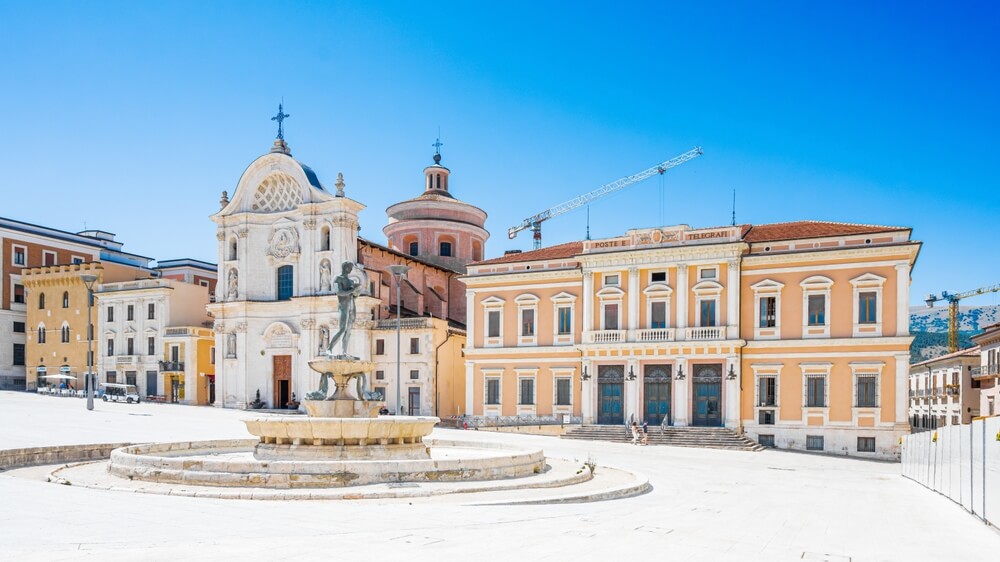
Abruzzo’s capital, L’Aquila, is just a 1.5 hour drive from Rome so it’s easy to reach and well worth the journey. Set high in the Apennine Mountains, surrounded by stunning vistas, L’aquila is well off the standard tourist trail but certainly worth visiting. Known for its medieval streets and Renaissance architecture, L’Aquila is perfect for travellers looking for a true taste of authentic Italy. Although relatively unknown among tourists, many people will be familiar with L’Aquila after the city suffered a significant earthquake in 2009. Many of its buildings were damaged or destroyed but it’s what came after this disaster that most people now talk of. Local strength and spirit came together and much of the area damaged by the earthquake has now been lovingly restored and rebuilt.
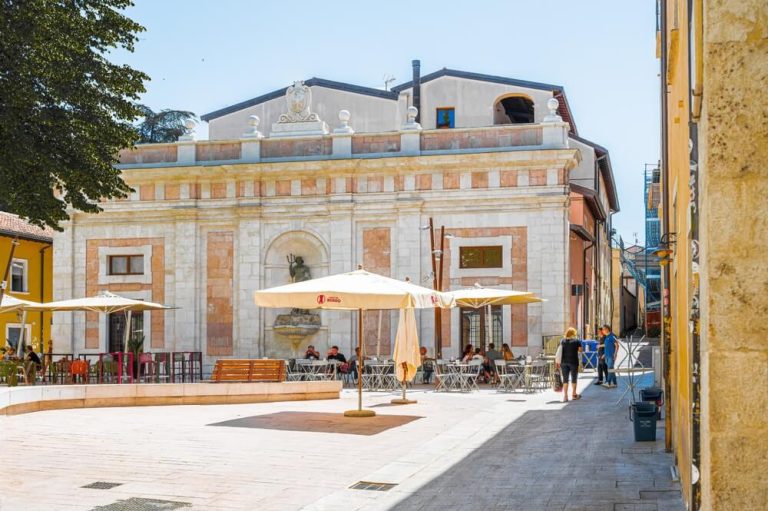
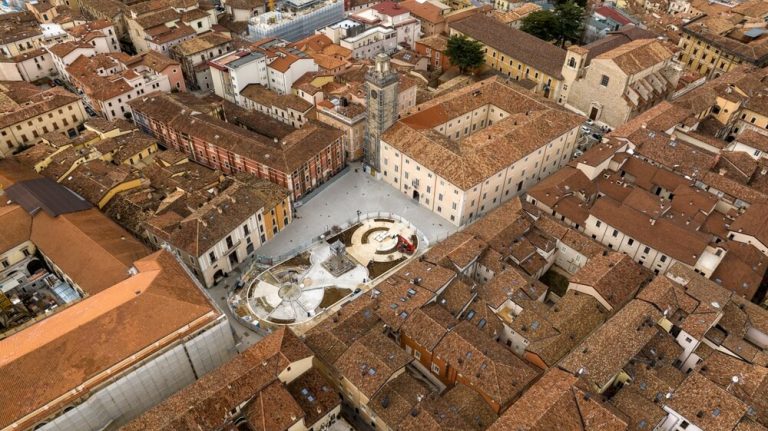
L’Aquila is a university city and with that comes a youthful vibrance and energy. Aperitivo hour is well attended and it is also home to some excellent restaurants. The heart of this scene is the Piazza del Duomo. As the city’s main square, it is lined with buzzing cafes, bars and restaurants. And, during the summer months it also doubles as a stage for live music and entertainment.
However the city’s main attractions are its two main churches. The Basilica di Santa Maria Collemaggio is most famous for its stunning pink and white tile work along with being home to Italy’s first holy door. This dates back even further than Rome and it is the only church outside Rome to have ever crowned a pope. The second is the Basilica di San Bernardino, a magnificent example of Renaissance architecture with some equally magnificent artwork on its walls and ceilings. However, one of our favourite things about this church is the view as you leave from the top of the iconic white staircase. Through an almost natural window you can see one of the finest views around of the Apennine mountains.
If you have time, head outside of the city centre to the Forte Spagnola. This is a majestic 16th century fort surrounded by absolutely stunning gardens. From here the views of the surrounding mountains are exquisite. Our top tip is to time your visit to coincide with the sunset – it’s one of the finest we’ve ever seen.
Tips for navigating the city
L’Aquila is a fairly compact city and much of its centre and old town is best explored on foot. As another of Abruzzo’s hill top destinations, there are lots of steps which link the piazzas and lanes and the ground can often be uneven so we recommend wearing comfortable flat shoes.
Buses can take you out of the centre and can be especially useful for your onward journey if you arrive into the city’s main bus terminal. Services are operated by AMA and information on routes along with timetables are available on their website. If you plan to drive to L’Aquila from your Abruzzo villa, be sure to park outside the ZTL in one of the city’s car parks. There is very limited free on-street parking which is marked out with white bays. Remember – if the lines are blue, you will need to find a parking meter and make payment.
Accommodation and dining recommendations
While you can, of course, stay in the centre of L’Aquila, given that it’s so easy to reach from the surrounding countryside, we recommend finding an Abruzzo villa rental outside the city. The countryside around L’Aquila is some of the most stunning in all of Italy and we definitely recommend spending at least a few days in Abruzzo here.
But, if you do want to stay in the centre of L’Aquila there is a reasonably good selection of hotels and B&Bs to choose from. Aiming to be as close to the centre of the old town as you can is also good advice.
For an evening meal or long lunch we recommend Arrosticini Divini. Lamb is often the meat of choice in L’Aquila and the lamb skewers here are true to the restaurant’s name – divine. Taverna dei Sazi is another very good option for an authentic experience. The food is simple and delicious and it’s the perfect place to try L’Aquila’s signature dish – Anellini alla Pecorara. This is a dish of ring-shaped pasta in a tomato and mixed vegetable sauce served with a generous helping of local ricotta.
For a sweet treat, pop into La Pistacchieria for some of the finest gelato and cannoli in town. These will be some of the finest cannoli you will try outside Sicily! It’s tiny inside but there are few tables and chairs outside in the piazza on which to enjoy your treats.
Finally, for a very good glass of wine or aperitivo we recommend the Ju Boss Cantina. It’s a place where you can almost breathe the history of the city, especially as this was the first public place to sell wine in L’Aquila.
Pescara
Introduction to Pescara
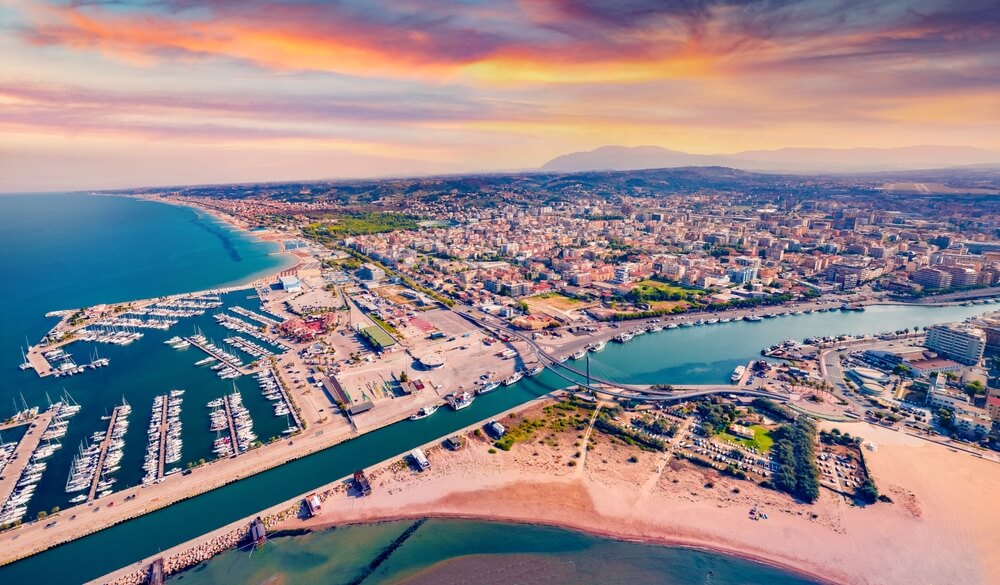
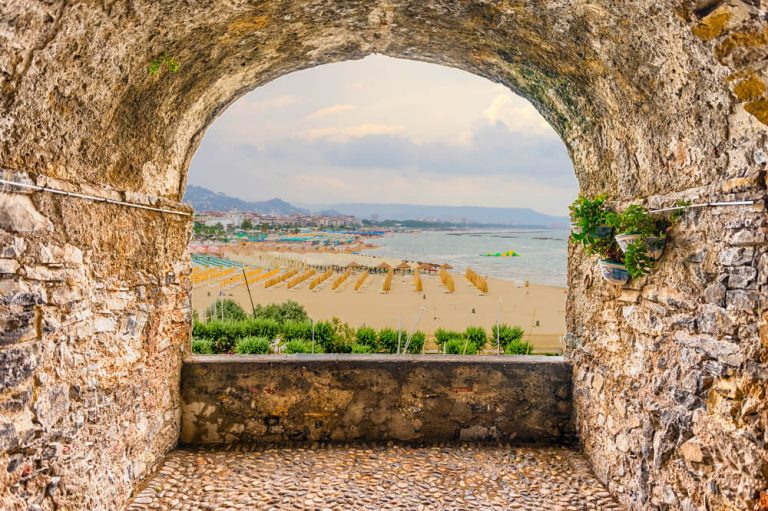
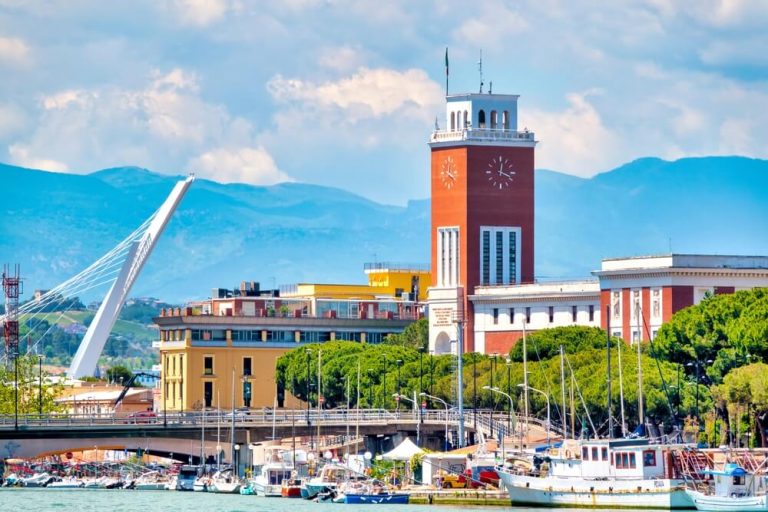
Although Pescara is not the region’s capital city, as home to the region’s only international airport, it is often the starting point of a trip to Abruzzo. Sometimes known as the coastal capital, Pescara is the perfect introduction to Abruzzo. Much of the city’s allure comes from its collection of chic beach club’s which line the golden sandy beach. Pescara has a modern contemporary feel which brings a bright energy but as a relatively small city, the general vibe is relaxed.
While the beach is the main attraction, Pescara is blessed with a majestic mountainous back drop. The often snow capped Appenines stand watch over the city and offer a taste of what Abruzzo has to offer away from its stunning coastline.
And, although (on Italian terms!), Pescara is a relatively modern city, this does not mean that it is culturally bereft. The city is home to the Gabriele D’Annunzio Museum, dedicated to the poet and Italian nationalist hero who was born in the city, and the Museo delle Genti d’Abruzzo. This museum celebrates the region’s rich traditions, from shepherding to winemaking.
However, one of our favourite things to do in Pescara is to walk or cycle along the Lungomare promenade. This car-free pathway stretches along the city’s coastline and is dotted with bars and restaurants. In the summer, this is the most lovely part of Pescara and you will often hear live music well into the night. The highlight has to be the Ponte del Mare – a magnificent bridge and equally impressive example of contemporary Italian architecture.
Tips for navigating the city
Pescara is a small city and most visitors manage to explore the main attractions on foot. However, renting a bike or e-scooter is another way to discover the city, especially along the Lungomare. There are several stands offering rentals. If you enjoy cycling, you may also want to extend your ride on to the Trabocchi Coast Cycle Path which heads south towards Ortona.
Local buses are another option. Tua Abruzzo’s services connect the city centre to more suburban neighbourhoods. Like in most cities, driving is not always easy in Pescara, especially in the summer months. If you do need to drive into the centre of Pescara, aim to arrive early and look for bays with blue lines for free parking. Alternatively there are a couple of multi-storey car parks fairly close to the seafront.
Accommodation and dining recommendations
If you plan to stay overnight in Pescara there are plenty of accommodation options on offer, suitable for all budgets. These include hotels in Pescara, as well as B&Bs apartments too. Just be aware that, whatever option you choose, you will need to pay a tourist tax. In Pescara, the tourist tax applies to all accommodation but the amount depends on the type and rating of your hotel or holiday rental. Typically, costs are between €1.50 and €4 per person per night. The tax applies to all those aged 14 and over and it is applied for a maximum of four consecutive nights. Alternatively, given how easy it is to reach Pescara by public transport, you could also opt to stay in an Abruzzo villa or apartment in the surrounding countryside.
For true authentic Abruzzese cuisine, we suggest a visit to Dal Primo. With a frequently changing menu we can guarantee that you will definitely not be disappointed. Likewise dinner at Taverna 58 is a favourite of ours. Food is simple, authentic, delicious and great value too.
As you might expect from a city with such vibrant energy, aperitivo hour in Pescara is big business. While the most obvious place to sip a sundowner is the Lungomare (and it is a great spot), there are also some gems away from the seafront. If you’re serious about wine, then Don Gennaro is a must visit. The selection here is almost unimaginably large and the staff’s knowledge is just as impressive.
For coffee and cornetti don’t miss Forno Ardito. It’s an artisanal bakery and a favourite spot of ours to get a caffeine hit and a sweet treat in the morning or an aperitivo in the evening.
Teramo

Introduction to Teramo
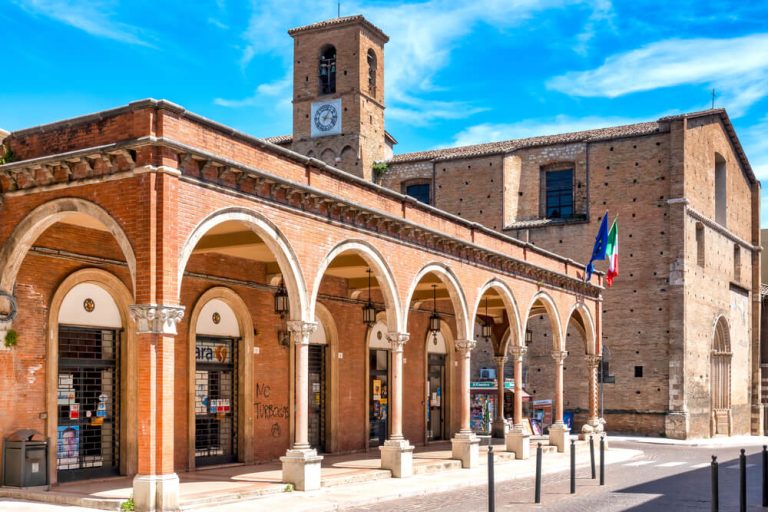
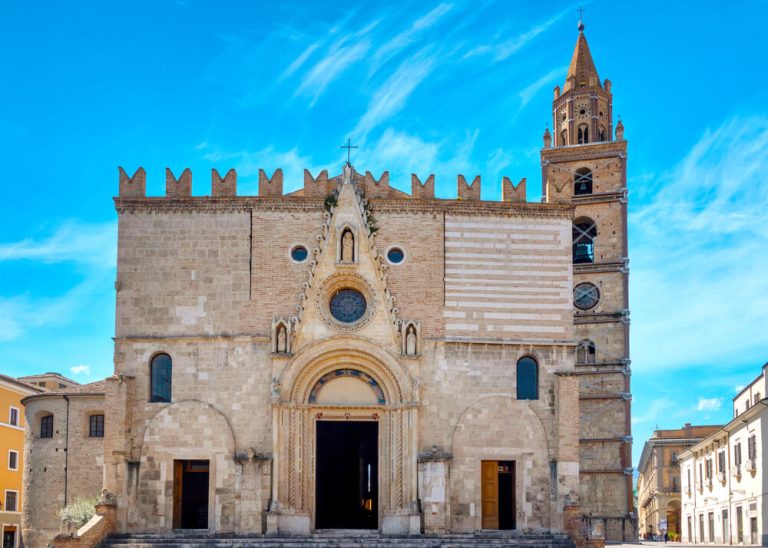
Teramo is a small city in Abruzzo edging up towards the region’s border with Marche. It’s just 30 minutes from the coast and about 1 hour from Pescara. Compact is probably a good way to describe the city. There’s plenty to enjoy but it’s all in a relatively small area. The city is home to a university so it has a youthful vibe but contrasted with some stunning Romanesque and Gothic architecture.
The city’s Roman theatre and amphitheatre sit side by side as the centrepieces of the old town along with the magnificent Romanesque cathedral. Coffee or aperitivi are best enjoyed in Piazza Martiri della Liberta, the social heart of Teramo. This is also a great spot for some people watching.
And while we love Teramo, it’s also a great base from which to explore the Gran Sasso National Park. Here there is an abundance of adventure sports and hiking routes to enjoy. Or simply take a drive in some of the finest Abruzzese countryside.
Tips for navigating the city
The centre of Teramo is compact and relatively flat so perfect to explore on foot. Tuabruzzo do run a local bus service but this is largely unnecessary. If you’re arriving by train then you can either choose to walk into the centre of the city or hop on a local bus. If arriving by car, there are car parks which are clearly signposted and outside of the ZTL. The central piazzas and boulevards in Teramo are car-free which makes them perfect for a stroll.
Accommodation and dining recommendations
It’s not necessary to stay in the centre of Teramo. The city is small enough to see in a day. We recommend opting for an Abruzzo villa where you can relax in the region’s stunning countryside and easily make a trip in to the centre of Teramo.
Like most of Abruzzo’s city’s, Teramo is teeming with traditional Abruzzan restaurants and trattoria and we’re yet to find one that we haven’t enjoyed. One of our favourite things about arriving in an Italian town or city at the approach to lunchtime is the delight of aromas that fill the streets and Teramo is no exception.
On our first trip here, simply by following our noses we found one of our favourite restaurants in Abruzzo. Tucked in the city’s alleys, Borgo Antico has a great menu and caters well for vegetarians too. The star of the show on our visit was the local speciality – Spaghetti Chitarra. The lamb ragu sauce was one of the best we’ve ever had.
If you’re looking for a fish restaurant then Scuderie Savini is an excellent choice. The fish and seafood is exceptionally fresh.
For a drink or aperitivo, pop in to Enoteca Centrale Acino Bar & Vino and join the locals while they decompress from their days and welcome in the evening.
Vasto
Introduction to Vasto
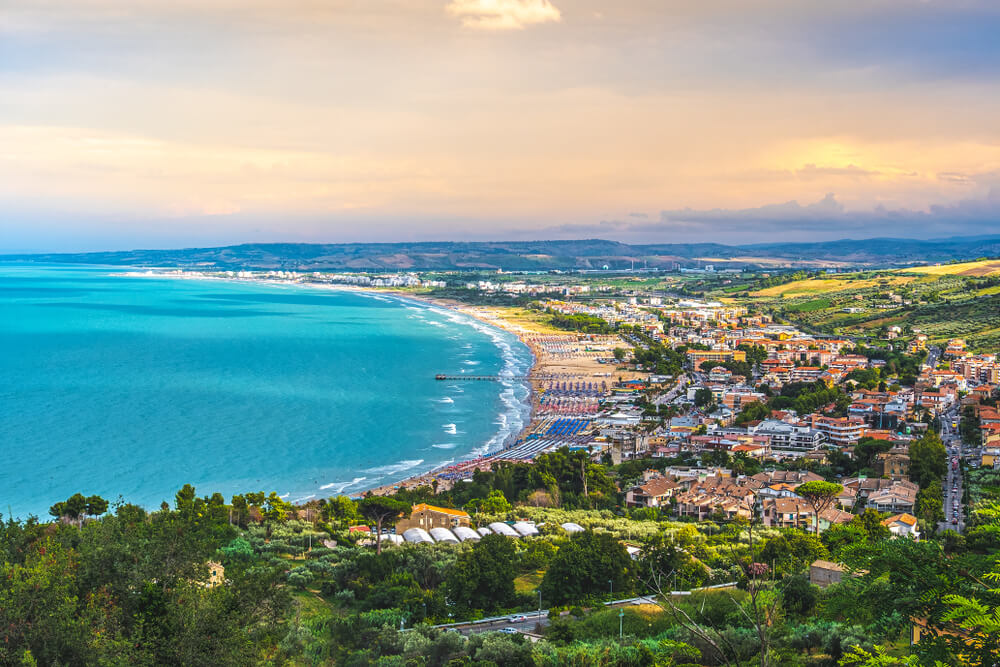
Perched dramatically above the Adriatic Sea, Vasto is one of Abruzzo’s most captivating coastal towns. It’s a place where medieval charm, sweeping sea views and elegant seaside living come together perfectly. Divided into the historic Vasto Alta and the beachside Marina di Vasto, the town offers the perfect balance between culture and coastline.
The heart of the town is its historic centre. This is characterised by a maze of narrow lanes, sunlit piazzas and centuries-old buildings. The striking Castello Caldoresco dominates the skyline, while the nearby gardens at the Palazzo d’Avalos give visitors a glimpse into Vasto’s Renaissance past.
Down below, the Marina di Vasto has a long, soft sandy beach and calm waters. Here, a series of smart stabilimenti (beach clubs) line the shore. Just beyond lies the famous Trabocchi Coast, where traditional wooden fishing structures stretch out over the sea. This is a stark reminder of the region’s maritime heritage. Whether you’re swimming, strolling along the boardwalk, or enjoying a seafood lunch above the waves, the coastline here feels special.
Tips for navigating the city
Vasto is best explored on foot, especially the historic centre. The old town is compact, though be prepared for some slopes and steps as you wander between viewpoints and piazzas.
Marina di Vasto sits below the historic centre, and while it’s walkable, the route back up is steep. Many visitors prefer to drive or take one of the local buses that run regularly between the two areas, especially in the Summer. Parking is generally easier near the marina, with more limited spaces in Vasto Alta during peak season.
If you enjoy cycling, Vasto is a fantastic starting point for exploring the Trabocchi Coast Cycle Path. This one of Abruzzo’s most scenic routes. The path is mostly flat and follows the old coastal railway line, passing beaches, hidden coves and several trabocchi converted into restaurants.

Accommodation and dining recommendations
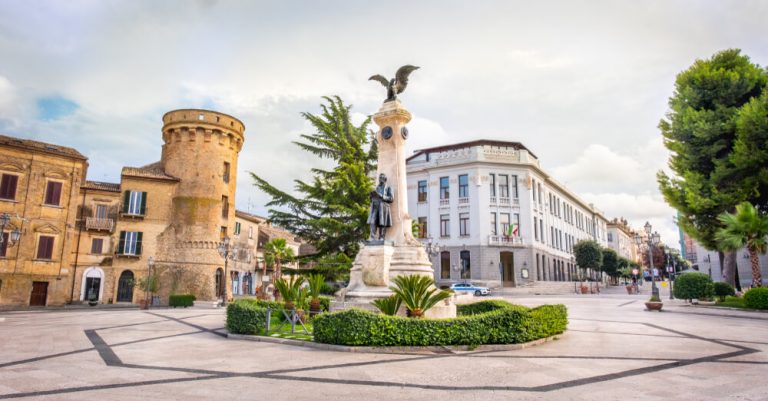
Seafood lovers will feel very at home in Vasto. La Votta di Mare, located along the marina, is one of our favourites for its super-fresh fish and relaxed atmosphere, not to mention the views. In the historic centre, Ristorante Il Re del Mare also provides classic coastal flavours.
Aperitivo in Vasto is a real pleasure. In Vasto Alta, Bar D’Annunzio and Bar Cavour are popular spots where locals gather as the evening light softens over the piazza.
Things to do in Abruzzo
History and Culture
Abruzzo is often celebrated for its magnificent mountains and stunning beaches, however the region’s rich history and cultural experiences mustn’t be overlooked. Historians believe that Abruzzo has been inhabited by humans for millions of years with evidence of dwellings dating back as far as the paleolithic era. Later part of the Roman Empire and then taken by the Normans and Lombards, Abruzzo was then part of the kingdom of Naples and was not a fully fledged independent region until 1963.
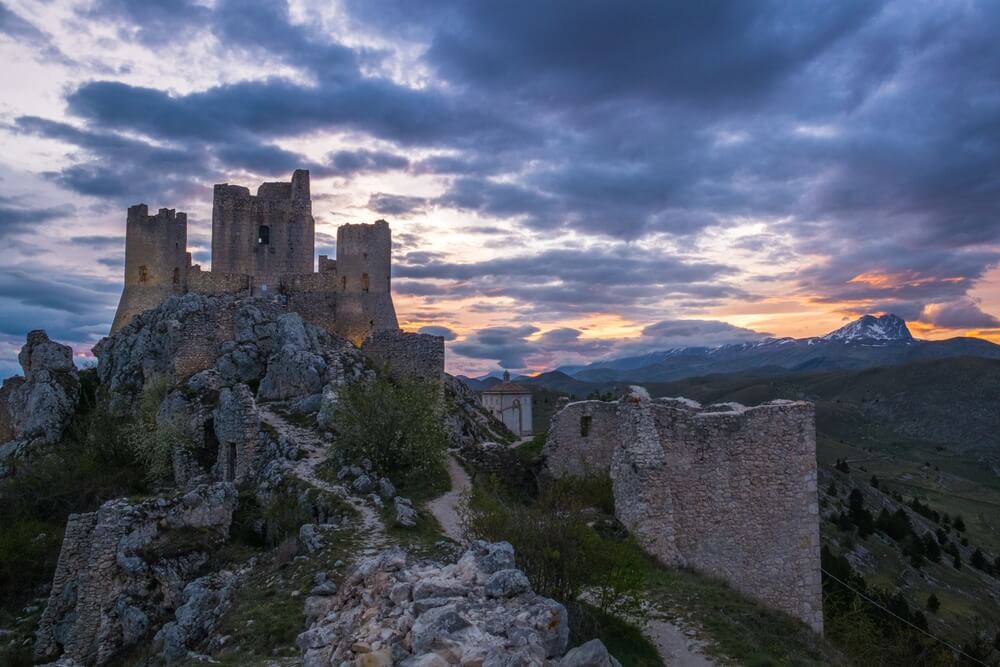
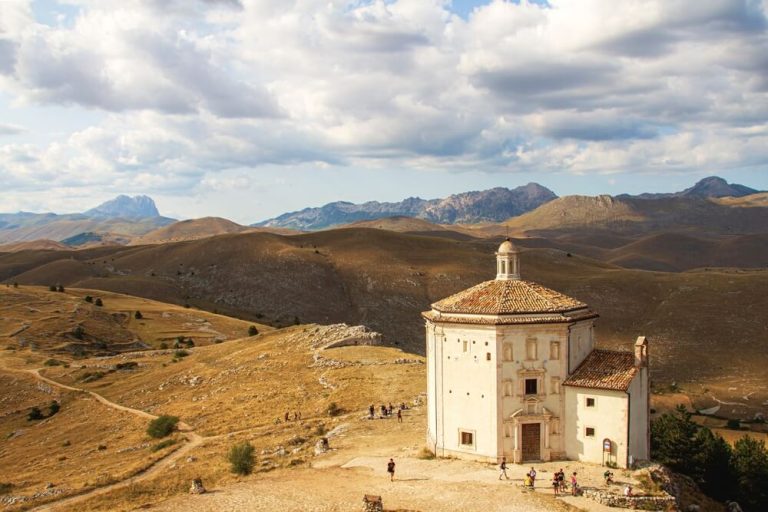
The fort at Rocca Calascio is a fine example of the historic richness in the region. As one of Italy’s oldest fortresses, it’s a fine example of why even many thousands of years ago Abruzzo was both a strategic location in Italy but also full of a richness worth protecting.
The magnificent hilltop towns which punctuate Abruzzo’s dramatic mountainous landscape have almost infinite opportunities to discover ancient churches and piazzas. As one of Italy’s oldest towns, Chieti is a stand out favourite. For contrast the seaside trabocchi tell the story of how fishing is woven into coastal culture in Abruzzo and are a wonderful example of bringing a pivotal part of the region’s history back to life. Enjoying a long lunch, surrounded by the azure adriatic sea is one of our favourite ways to touch base with authentic Abruzzan culture.
Vineyards and wineries
Abruzzo is well renowned for its wines and has proved that it can easily hold its own with the more famous wine regions of Tuscany and Piedmont. There’s no doubt that Montepulciano Abruzzo is the region’s most well known and also one of our favourite Italian red wines. In more recent years, much work has gone into raising the profile of Abruzzo’s delicious white wines too. Fans of crisp dry whites, will love the region’s ever popular Pecorino – perfectly matched to a warm summer’s evening watching the sunset.
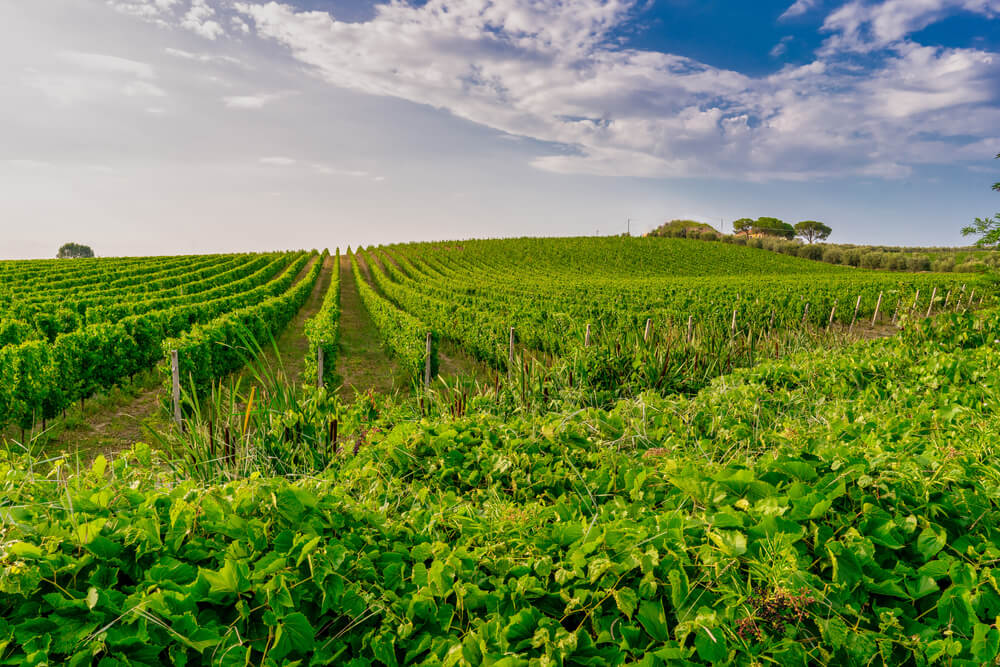
Abruzzo’s most famous vineyard is Masciarelli and there’s a very good reason for its success. Not only is the wine exquisite but the setting and experience here matches the luxury of the tastes you will experience.
Often considered a must for anyone enjoying a wine pilgrimage in Italy, the Emidio Pepe winery is a family run vineyard that produces some of the finest wine in the region using natural methods and biodynamic techniques. A more rustic experience but a chance to learn and experience authentic wine making in Abruzzo at its very best.
Exploring the Abruzzo countryside
Abruzzo’s countryside is breathtakingly beautiful. With three National Parks to choose from, a trip into Abruzzo’s countryside can almost feel overwhelming. We recommend thinking in advance about what you want to do and base your plans on this.
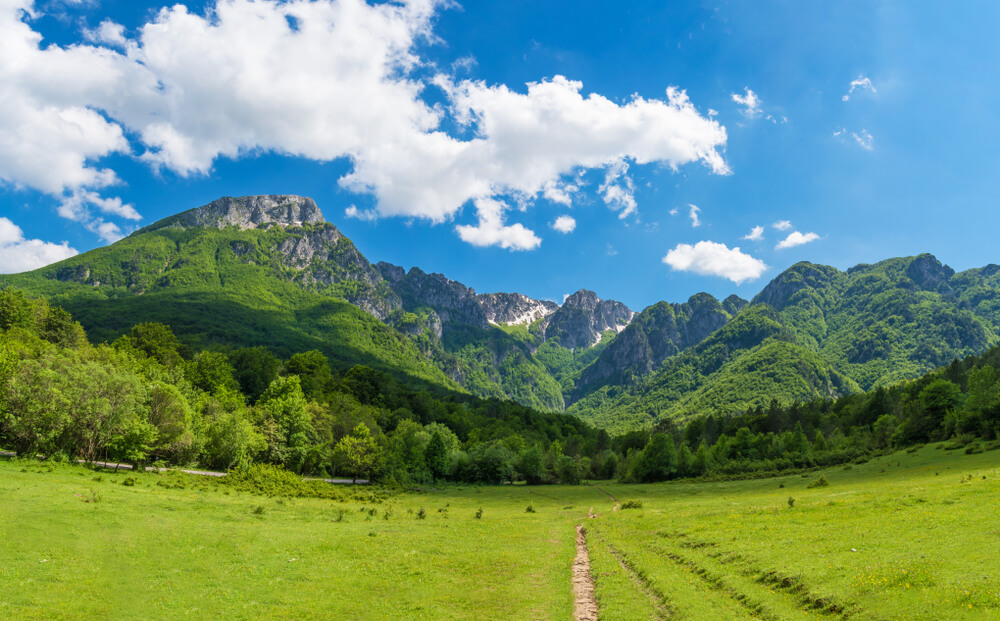
Fans of mountains are spoiled for choice but if you want to scale the region’s highest peak (and Italy’s highest mountain outside of the alps) then the National Park of Gran Sasso and Monti della Laga is where you want to be. And while Corne Grande is the star of the show, the hikes up to Campo Imperatore reward visitors with a stunning plateau amongst the jagged peaks. Alternatively, take the cable car from Fonte Cerreto to enjoy the magnificent views without the challenge of the hike.
Wildlife lovers may prefer the Abruzzo, Lazio and Molise National Park – this straddles the borders of all three regions. Home to some of the rarest species in Europe, it’s not unusual to spot the Marsican brown bear, an Apennine wolf or an Abruzzo chamois. Joining a tour with an expert guide can make this much more likely. Click here to book your tour in advance.
For travellers looking for a more spiritual experience in the Abruzzo countryside, the Majella National Park offers a unique combination of ancient caves and hermitages inhabited centuries ago, with dramatic gorges and fairytale forests. A highlight is the Hermitage of San Bartolomeo in Legio. An ancient hermitage, carved into the rock hanging over a stunning gorge. Our friends at Passucci Travel offer an excellent tour of the park.
Wherever you choose to enjoy the Abruzzo countryside, we have no doubt that it will be a magical experience.
Beaches
Much like everything in Abruzzo, the region’s beaches are unsung and largely undiscovered by international tourists. And again, they are some of the best we’ve found in Italy. Abruzzo’s coastline stretches for 133 kms from Martinsicuro in the north to San Salvo Marina in the south. And, in 2025 its beaches were awarded a staggering 16 blue flag awards for high water quality and cleanliness.
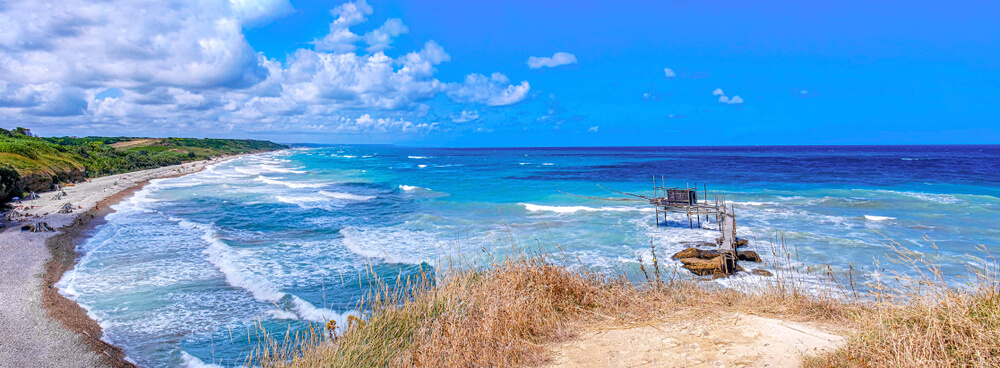
Abruzzo’s beaches are as diverse as its landscape, offering wide sweeping dune backed sandy crescents, crystalline rocky coves and almost everything in between. And we mustn’t forget the lake beaches too – often the perfect spot to cool off after a summer hike in the mountains.
For a natural experience, away from the crowds, head to Punta Aderci. This is a designated nature reserve so has been protected from development of beach clubs and hotels. The main beach is a sweeping crescent of golden-white sand, backed by dunes and the coastal path. Beyond there are a series of rocky coves and outcrops to explore. You can’t buy anything here so come prepared. Pack a delicious Italian picnic and enjoy nature at its finest.
Pescara is the place to be for beach clubs, bars and beachside nightclubs. By day the beach is filled with every kind of beach and watersport you can imagine. And by night the waterfront bars and clubs come alive with live music and dancing into the early hours.
For families the beach at Roseto degli Abruzzi is a great option. The golden sand here shelves gently into the sea and the beach is well equipped with everything you need to enjoy a completely relaxing beach day.
Finally the lakeside beaches at both Scanno and Villalago have both been awarded Blue Flags and are fabulous options for a beach day in the mountains.
Best Places to Visit in Abruzzo
We would argue that some of the best places to visit in Tuscany are its hidden gems. However, we appreciate that there are also a number of bucket list sights that simply have to be ticked off for you to have fully discovered the region. For us, these attractions are those bucket list places to see in Tuscany.
Gran Sasso e Monti della Laga National Park
Often referred to as Italy’s rooftop and home to the nation’s highest peak outside of the Alps (Corno Grande), Abruzzo’s largest national park is both aesthetically majestic and full of adventure in equal measure.There are almost endless hiking and biking opportunities along with some of Italy’s most authentic hilltop villages to discover. We recommend splitting your time between adrenaline filled adventures and long relaxing lunches in Santo Stefano di Sessanio or Castelli – two of our favourite villages.
Scanno
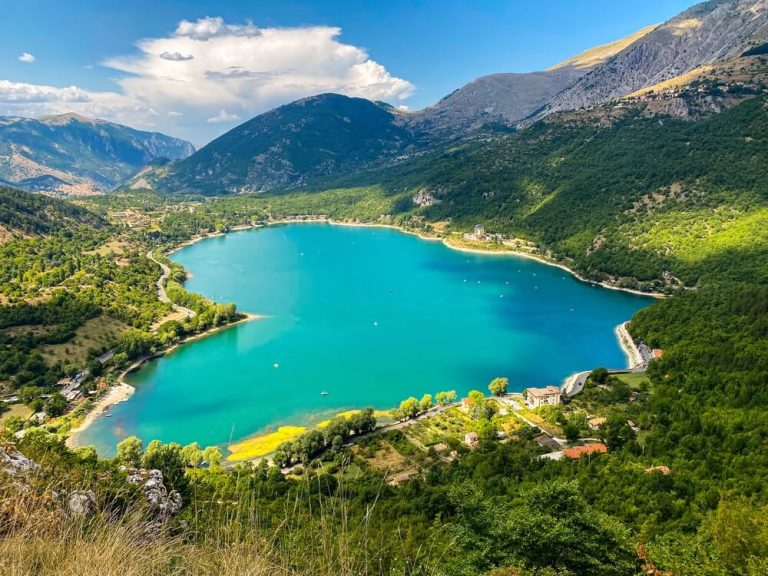
A postcard perfect Abruzzan hilltop town – Scanno huddles down between the huge Apennine mountains that tower over it on either side. The village itself sits at more 1,000 metres above sea level and such elevation brings some stunning views. Scanno is full of ancient charm with artisan gold shops and traditional restaurants punctuating the ancient alleys. But one of our favourite things to do is to follow the Sentiero del Cuore (the path of the heart) out of the village until you’re rewarded with a majestic view of the town’s heart shaped lake. The water here is pristine, often resembling a turquoise piece of cut class. In the summer months you can swim in the lake – something we’d highly recommend.
Rocca Calascio
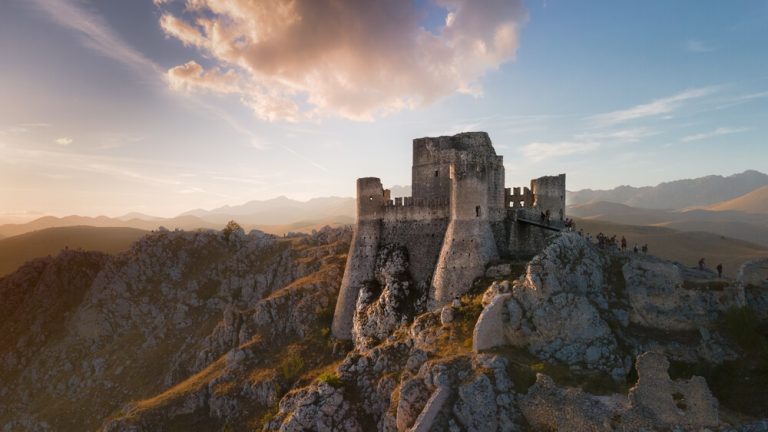
At nearly 1500 metres above sea level, this is the highest fort in Italy and one of its oldest too. Dating back to the 10th century when it was first built as a watchtower, Rocca Calascio has had several incarnations since and was badly damaged in an earthquake in 1703. Since then the fort has been largely untouched and is a magnificent way to step back in time. While you can park fairly close by, we actually recommend using one of the lower car parks and enjoying the short walk up. This gives you a chance to see the fort from different angles on the approach along with making the most of the beautiful views from this elevated vantage point.
Pescocostanzo
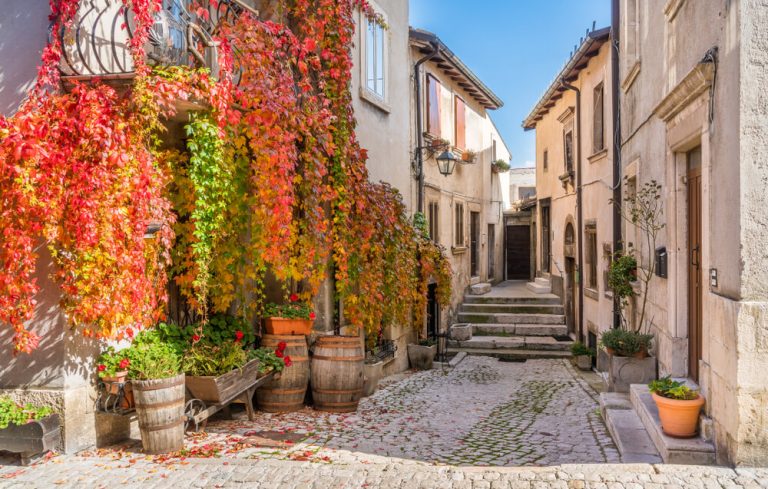
At nearly 1400 metres above sea level in the stunning Maiella National Park, Pescocostanzo is officially one of Italy’s most beautiful villages. And while it is indeed beautiful and well worth a visit, this hilltop town is also a gateway to some of the best skiing and adventure sports in Abruzzo. The Vallefura-Pescocostanzo ski resort extends across Mount Cavario and has skiing for all levels and abilities. The ski pass here is one of the best value in Europe with six days of skiing costing just 135 euros and there are significant discounts for children and seniors too. Away from the slopes and in the summer months, the mountains here are transformed into a magnificent patchwork of green and offer almost endless hiking and biking opportunities.
San Vito
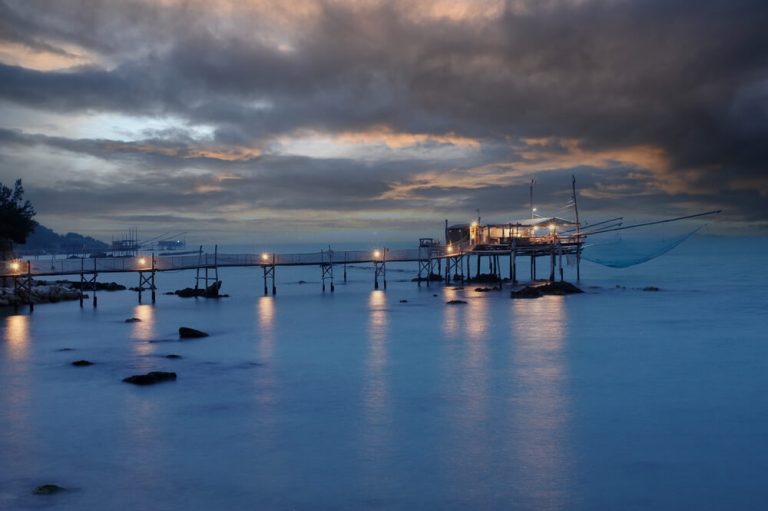
This is a town of two halves and is technically actually two separate towns but they are close enough that you can easily visit them both. The original settlement is up on the hill and offers stunning views down the sparkling azure waters of the adriatic below. San Vito Chietino has developed over many decades and is the coastal area of the town and this is also where the main railway station is located – offering excellent links up to Ortona, Pescara and beyond. It’s here that you will also find the iconic trabocchi. Originally used as mechanical assistance for fishermen their more contemporary incarnation has seen them be developed into fish and seafood restaurants. They offer wonderful Abruzzan cuisine in the most authentic of settings. You will see the structures jutting out into the sea – they look a bit like piers with huts at the end.
Sulmona
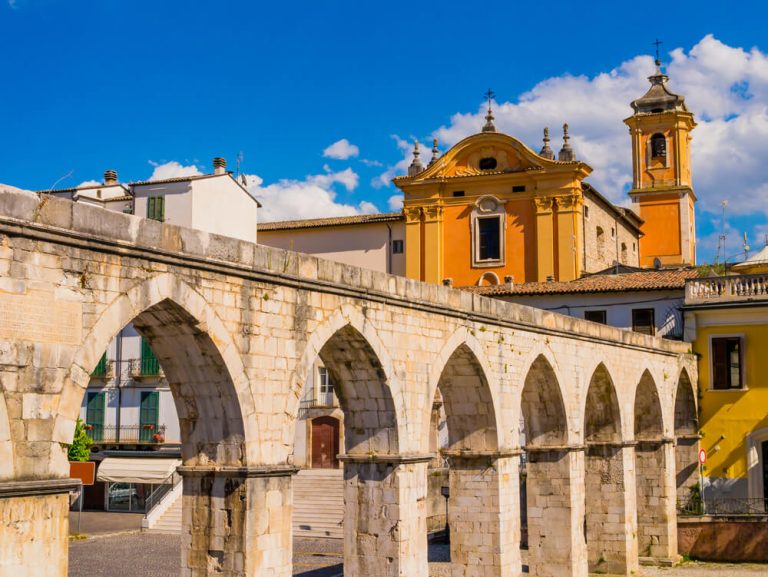
Sulmona is a town that oozes history and is full of ancient Abruzzan charm. Set in a lush green valley the main attraction is the medieval aqueduct which acts as a centrepiece to the many historical sites. Another highlight is the iconic Piazza Garibaldi. The town’s main square is filled with locals and tourists alike enjoying a coffee and cornetto or evening aperitivo. It’s a social hub and the perfect place to relax and enjoy some top notch people watching.
What to Eat and Drink in Abruzzo
A trip to Abruzzo is a real treat for the tastebuds. With plenty of local specialities to try and some of the finest Italian wine to enjoy , there’s no doubt that you will leave with bellies full of delicious fayre and hearts full of love for Abruzzan cuisine.
Arrosticini
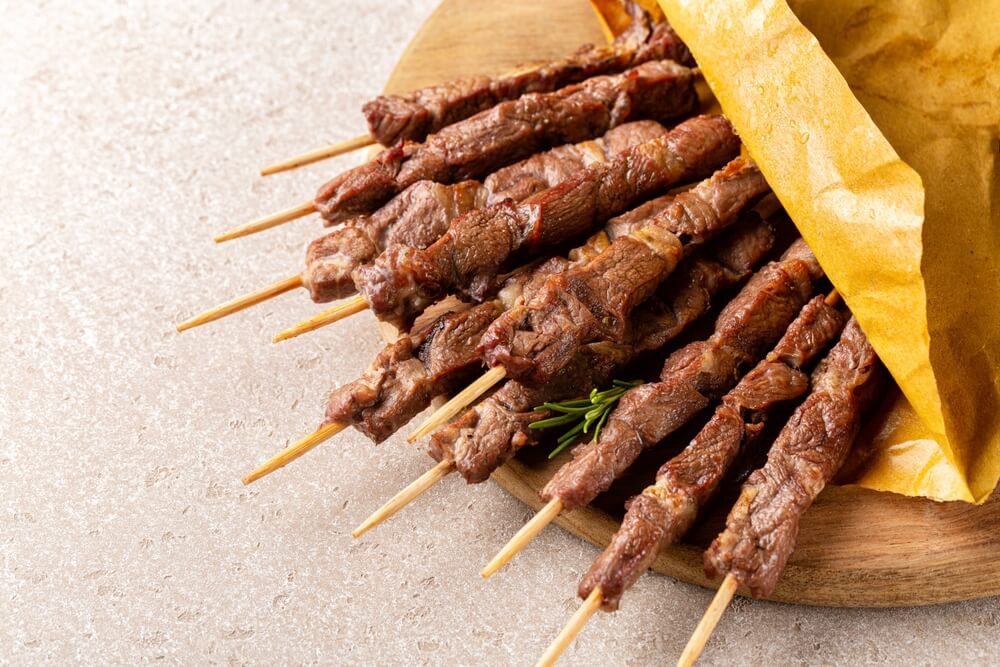
This is the most iconic dish in Abruzzo and the smell of it fills the streets of any town or village as the sun starts to set. These seemingly simple mutton (not lamb as any local will tell you!) skewers are a staple for an Abruzzese family and if there were a national dish of Abruzzo this would be it. Traditionally cooked over coals, the meat is smokey, salty and deliciously moreish. You’ll find locals enjoying arrosticini with fresh bread and a healthy helping of local olive oil.
Brodetto di Pesce
This traditional fish stew features in nearly every coastal restaurant’s menu. The exact recipe can differ from town to town and even family to family. Wherever you are, the broth is made with fish stock and a generous portion of fish and seafood more often caught earlier that day by local fishermen. In Vasto you’ll find Brodetto di Pesce made without tomatoes but with green peppers and local white wine. But the soup remains delicious whatever the variation.
Spaghetti alla Chitarra
We love pasta and discovering Italy’s regional specialities has been one of our favourite culinary pastimes over the years. And we can assure you that Abruzzo did not disappoint. Spaghetti alla Chitarra, gets its name from the way in which the pasta is cut. The dough is pressed through a wire rack which very much resembles the strings of a guitar, hence chitarra. The result is square-edged spaghetti which is served with a rich ragu sauce (usually lamb). Available across the region and always delicious, a trip to Abruzzo without spaghetti alla chitarra would be most disappointing.
Pecorino di Farindola
Cheese in Abruzzo is a serious business and non more than the region’s outstanding Pecorino. Made with raw sheep’s milk and the only Italian cheese made with pork rennet, this cheese perfectly balances a creamy texture with a strong tangy flavour. Some people say it’s almost spicy. We enjoy it most with a glass of Montepulciano and recommend that you do too.
Sise della Monarche
Although this is the official name of this sweet treat, locals more affectionately refer to them as ‘nuns tits’. There are two stories about their origin. One is that their shape refers to the three mountain ranges in Abruzzo. While this version is probably true, the second version traces back to the nuns of the convent in Santa Chiara. The story goes that they originally prepared the dessert for the feast of Saint Agatha. The outer peaks are said to represent the nuns’ breasts with the third in the middle being their bowed heads. The recipe was passed on to the Palmerio brothers who opened the first pastry shop in Guardiagrele in 1913.
Whichever version of the story you prefer, the recipe remains a closely guarded secret and the cakes are only available in two bakeries in Guardiagrele. The cakes are made with a light sponge filled with a chantilly cream. And while these components are not overly sweet, the generous helping of icing sugar which tops the cakes ensures a good sugar hit. The combination of excessive icing sugar and oozing chantilly cream makes them somewhat of a messy affair but we say embrace it and enjoy the sweet sweet moment.
The Best Time to Visit Abruzzo
High season in Abruzzo is July and August. This is when the coastal towns and beaches are alive with tourists enjoying their slice of Italy. If nightlife is a priority, then the summer months are definitely a good option. A highlight is the Pescara Jazz Festival which usually takes place at the beginning of July.
The weather is hot with long warm evenings, perfect al fresco dining. And while the weather in the mountains is likely to be sunny at this time of year, it will naturally feel cooler as you gain altitude.
Officially the average daily high temperature sits at around 30 degrees during July and August. However humidity and the sun can make it feel much warmer than that. If your trip to Abruzzo is at this time of year then we recommend spending at least some of your time on the coast where there is usually a light breeze and also the opportunity to jump in the sea to cool off. Opting for a villa or apartment in Abruzzo with a pool is also a very wise choice.

However, if you prefer the weather to be slightly cooler do consider visiting Abruzzo during May, June or September. This is one of our favourite times to explore the region and is ideal if you plan to take advantage of the hiking and biking on offer in the National Parks. The sea is warm enough to swim in by late May and is often still very pleasant for a dip well into October. Daytime temperatures hover around 25 degrees and the nights are more comfortable.
Abruzzo is still an undiscovered part of Italy and, for this reason, whilst it is busy in July and August, outside these months, tourist numbers are low. Abruzzo is the authentic Italian experience so many visitors to the country are now seeking.
Autumn also has the advantage of being harvest season. If you love wine then this is the perfect time to visit Abruzzo. A tour or tasting at a vineyard or winemaker at this time offers a wonderful window into harvest season. We recommend contacting our friends at Passucci Travel who arrange the best wine experiences in the area.
Winter in Abruzzo can offer a completely different experience. The Vallefura-Pescocostanzo ski area is one of the most undiscovered in Europe. And while it’s not as extensive as those in the Alps and Dolomites, the resort offers a good range of slopes for all abilities. You won’t find hordes of tourists and miles of lift queues. Skiing in Abruzzo is almost exclusively enjoyed by Italians. Come during the week and you’ll practically have the slopes to yourselves and at a fraction of the cost of any of Italy’s more famous northern ski resorts.
How many days do you need in Abruzzo?
To really experience the magic of Abruzzo, you need more than just a few days. At more than 10,000 square kilometers and with a wealth of diversity, we recommend having at least a week in Abruzzo. Most visitors split their time between the coastal resorts, stunning hilltop towns and mountainous National Parks and we think this is good advice.
If you arrive directly into Pescara, then this is an excellent first base. Pescara is a contemporary city with an excellent night scene and arguably the best beach clubs in Abruzzo. However, it’s worth remembering that Abruzzo’s coast stretches for 133 kms and has every kind of beach experience you can imagine. Choose from immaculately groomed luxury beach clubs to pristine natural beaches where fine white sand meets the crystalline Adriatic sea without interruption.
The region’s capital – L’Aquila – should be on all Abruzzo itineraries. And, if you’re arriving by train or have flown into one of Rome’s airports then it’s a natural first stop. However the hilltop towns of Scanno and Chieti must also not be missed.
Abruzzo’s mountains and countryside are also magnificent. Fans of adventure sports will be drawn to the hiking, biking and other adrenaline filled experiences on offer. However, even if you’re not a thrill seeker, there are a number of stunning drives through the mountains with some of the finest vistas in Italy to enjoy.
3 Days in Abruzzo
Spending just three days in Abruzzo is not really long enough to enjoy everything the region has to offer. So if you are restricted to three days then we recommend making sure that you use every minute wisely.
Our advice is to arrive by air into Pescara and make this Abruzzo mini-break a chance to explore Abruzzo’s coastal riches, saving the countryside and hill top towns for another trip.
Using Pescara as your base you can spend a day here but also hop on the train or in your hire car to Ortona which is only about 30 minutes from Pescara. If the weather is fine, make sure you enjoy a stroll on the coastal path.
Drive further south toward San Vito Chietino and Fossacesia and you’ll meet the Costa dei Trabocchi. Not only are there yet more coastal walking and cycling routes to enjoy but make sure you also make time for a lazy lunch at one of Abruzzo’s iconic trabocchi seafood restaurants.
Our main advice for a three day itinerary in Abruzzo is not to rush. Although you may feel short on time, try not to over schedule yourselves. Abruzzo is not made to be enjoyed like this.
5 Days in Abruzzo
With 5 days to enjoy Abruzzo, we would still recommend arriving into Pescara. Make sure you spend at least a long morning exploring Pescara itself. If you’re visiting in the summer then it will be almost too difficult to resist spending at least a couple of hours at one of the beach clubs. If your trip is off season, the walk along the city’s iconic promenade is still a must. Even in the winter you will find some bars and restaurants open for lunch or a coffee and cornetto.
Beyond Pescara, making the trip south to Ortona and the Costa dei Trabocchi is also recommended and easily reached as a day trip. With 5 days in Abruzzo you will also have time to head inland to the hilltop town of Chieti. While we are big fans of slow travel in order to see a bit more of Abruzzo, perhaps plan one long day of exploring the region’s inland towns and majestic countryside. Possible combinations could be to set out early for Scanno – about 1.5 hours drive from Pescara. Spend the morning discovering this ancient town and it’s stunning heart-shaped lake and then make the journey back via Sulmona or stop at a vineyard for a tour and tasting. Our friends at Passucci Travel are always happy to help you plan the perfect tour including lunch and a wine tasting.
5 days in Abruzzo will also give you just enough time to discover the region’s magnificent mountains and National Parks. If you are staying in Pescara, the Majella National Park is just over 1 hour drive inland. If you’re staying in a villa in Abruzzo, you may find you’re already on the doorstep of some of Europe’s most beautiful landscapes. Passucci Travel offer expert bespoke tours and experiences in the park, including private transfers from your villa.
A week in Abruzzo
Having the pleasure of 7 days in Abruzzo means you can really start to appreciate everything this hugely diverse region has to offer. We would recommend following some of the above itineraries but with the addition of at least one more hill top town. The most obvious in L’Aquila – Abruzzo’s capital. L’Aquila is 1.5 hours from Pescara but is very much en route if you’re arriving in the region from Rome. What’s more, it’s just a short drive from Rocca Calascio, one of the oldest and most interesting ancient forts in Italy.
Another addition, if you can spend a week in Abruzzo, is to extend your coastal travels south to Vasto – a stunning town set above the turquoise waters of the Adriatic below. The beaches in this area are wilder than those in the north. If you like fewer beach clubs and more nature, then the beaches in and around Vasto will be much more to your taste. The highlight of course being the Punta Aderci Nature Reserve, one of Italy’s most unspoiled beaches.
10 Days in Abruzzo
10 days in Abruzzo is ample time to explore the region without feeling rushed. We recommend factoring at least a day or two to sit back and relax at your villa in Abruzzo. Why not take relaxing to the next level and let us arrange for a private chef to come and take over the cooking duties? Or enjoy a wine tasting in the comfort of your own private villa. With 10 days in Abruzzo, you can enjoy everything on the 5 and 7 day itineraries but also make an extended trip to one of the National Parks or enjoy a whole day relaxing at a beach club.
If you are based in the south of the region, it is also possible to head south over the border into Molise and on to Puglia and visit Grotta di San Michele. This is an ancient church carved into the even more ancient limestone rock. Not only is this a popular stop for pilgrims but it’s also an impressive piece of engineering. Just a few hundred metres from the shores of Lago di Varano, combining these two attractions with a lazy lakeside lunch can make for a great day trip from the south of Abruzzo.
14 Days in Abruzzo
With 14 days to enjoy in Abruzzo, we would recommend either choosing two bases or opting for an villa in Abruzzo with a central location. Choosing one base near to Pescara is a good idea so you can experience the beach scene and also take advantage of the good transport links from the city along the coast. For a second base, we would either opt to stay in the mountains and enjoy some time immersed in nature or head to L’Aquila for a taste of life in Abruzzo’s capital. From here it’s still very easy to make day trips into the mountains and countryside.
Again though, try to resist the temptation to see it all. Rushing through a list of the top ten places to visit in Abruzzo is no way to really enjoy the region. Try to plan logical day trips as we’ve suggested above where you may visit a couple of towns or attractions in one day leaving you plenty of time to relax too. And always bear in mind that it can take a while to get from A to B in Abruzzo. Narrow, winding roads and tempting pit stops to admire the view means you can’t do anything but travel slowly in Abruzzo!
A month in Abruzzo
A month in Abruzzo is a privilege that not many visitors get to experience. However, if you are one of the lucky few then you’re in for a treat. Abruzzo is one of the most authentic regions in Italy. Mass tourism has not really ever hit and where tourism is developing it’s being done so tastefully, embracing both nature and tradition which make Abruzzo so special.
Having a month in Abruzzo means you can really immerse yourself in the culture. Of course, you will want to see the big attractions but try to spend at least some of your time living like a local. Shop at a market and embrace cooking with freshest local produce at your villa. Enjoy a passeggiata (the almost obligatory early evening stroll) and sip an aperitivo with the locals at an unassuming bar or cafe.
With a month in Abruzzo you can enjoy an extended tour of the National Parks. Passucci Travel offer excellent cycling and hiking tours with expert local guides. These can be tailored to your group’s needs and desires making for an unforgettable experience. A vineyard visit must also make your to do list.
At Bookings For You, we’d be delighted to help create a bespoke itinerary for your Abruzzo villa holiday. Our itineraries will be tailored to the location of your villa in Abruzzo and whether this is your first visit or whether you’re returning seasoned holidaymakers we can help you plan the perfect holiday in Abruzzo.
Abruzzo holidays for...
Abruzzo is incredibly diverse and ticks so many boxes that it can have a broad appeal. Whether you’re 8 or 88, there is something in Abruzzo for everyone to enjoy. That said, we have some great ideas about the best Abruzzo holidays for different travellers.
For Couples
We think Abruzzo is one of Italy’s most romantic destinations. Although it may not be the most obvious Italian location for a romantic getaway, Abruzzo’s authentic charm is hard to beat. Both its ancient hilltop towns and its unspoiled coastline ooze romance. Gaze into each others eyes over some of Italy’s finest food, stroll hand in hand through charming villages, go wine tasting in the Abruzzo hills, or opt for a private swim in a hidden cove. An intimate Abruzzo apartment is the perfect setting to enjoy each other’s company in complete privacy and seclusion.
For Families
Abruzzo should be top of your list if you’re travelling to Italy as a family, even more so if you plan to travel during European school holidays. The region’s relatively low profile leaves it far less crowded than its more famous neighbours meaning it tends to offer much better value for money. It can also be the perfect location for families looking to avoid tourist traps and who want to see the real Italy. Spend a few days at the beach or get an adrenaline hit in the mountains but make sure you also make time for some family time at your Abruzzo villa – the perfect place to recharge and reconnect.
Solo Travellers
Abruzzo is a haven for solo travellers. Being so diverse, the region is perfect for solo travellers who are seeking the tranquility of the unspoiled coast or magnificent mountains. Equally it offers a wealth of opportunities to discover history and culture in its ancient hilltop towns and villages.
With so much to experience it’s also the perfect region to join a group tour of a vineyard or one of the region’s National Parks. Max and his team at Passucci Travel organise some of the best tours we’ve experienced in Italy. This way, you also have the opportunity to meet like-minded travellers.
For Groups
Renting a villa in Abruzzo in the heart of the countryside is a great option for gatherings of friends or extended families. You’ll be able to enjoy the privacy and space that a self-catering villa offers whilst enjoying the wealth of cultural attractions that Abruzzo has to offer. Villas in Abruzzo with pools and expansive gardens create the perfect setting for a memorable group stay. We recommend you hire a private chef to cook for you so that everyone can put their feet up and relax.