





Umbria
Travel Guide
Everything you need to know
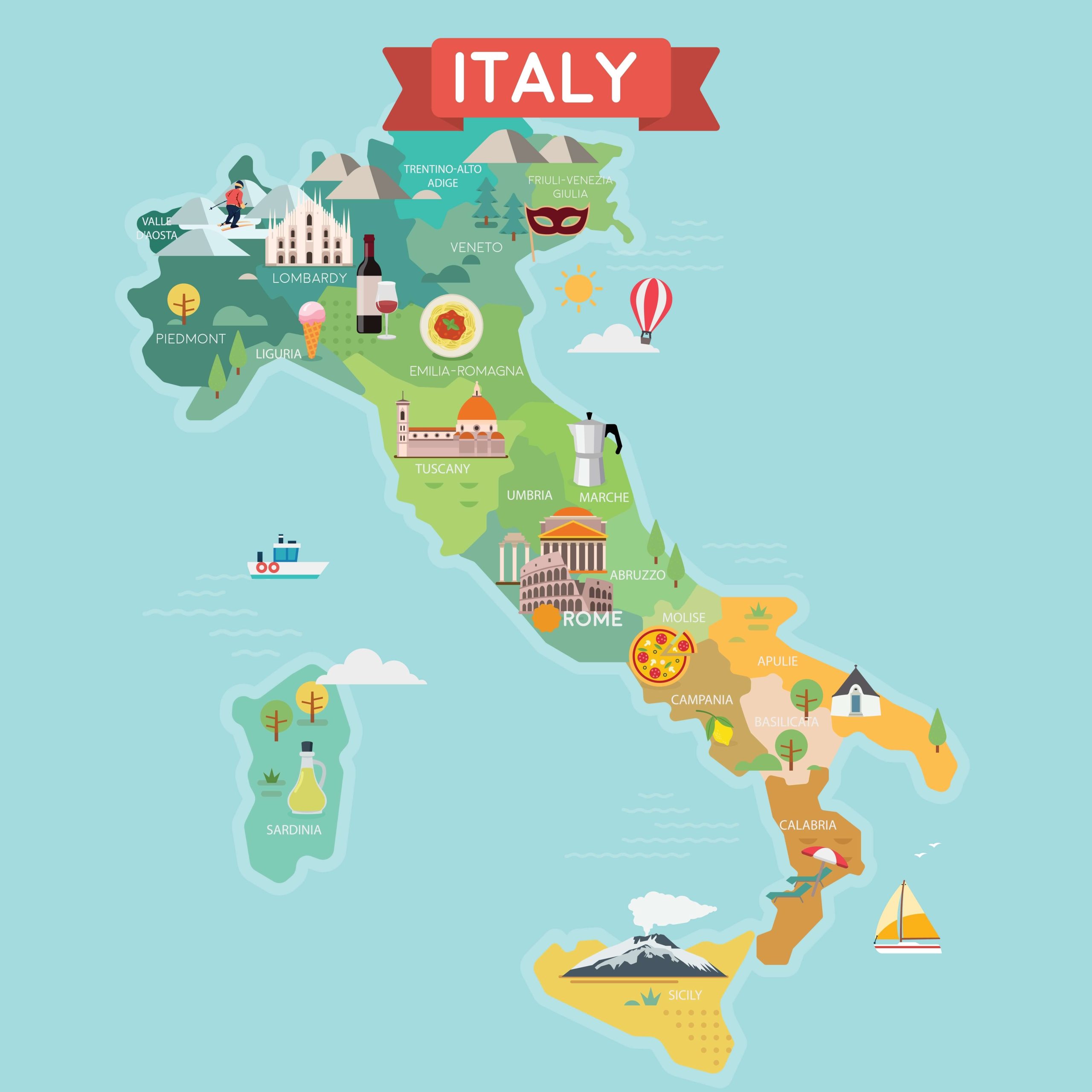
Where is Umbria
Nestled in the centre of Italy, southeast of Tuscany, north of Rome and Lazio, and west of Marche, Umbria is affectionately referred to as Italy’s ‘green heart’. It can claim to be the only Italian region that borders neither the sea nor a neighbouring country. As one of Italy’s smaller regions, it has just two provinces: Perugia to the north and Terni in the south.
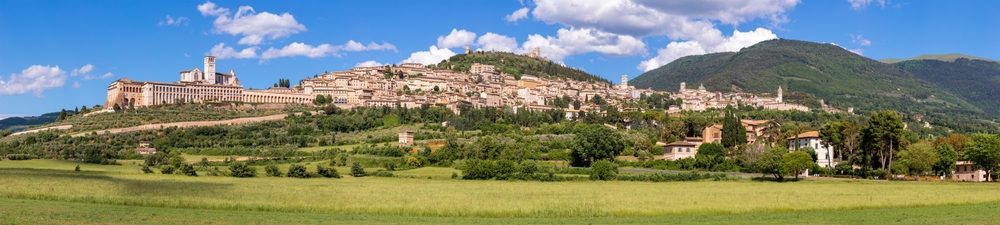
The city of Perugia is the capital of Umbria. Other principal cities include Assisi, Orvieto and Spoleto. Compared to its more famous neighbours, Umbria has traditionally remained somewhat under the radar. This has helped it remain authentic, seemingly untouched by time.
Umbria is best known for its idyllic Medieval hilltop villages and rural landscapes. Wooded hillsides, fertile valleys, olive groves and vineyards dominate the landscape. In short, Umbria is the perfect Italian holiday destination if you’re looking for a less crowded Italian experience.
How to get to Umbria
Umbria is very easy to reach either using public transport or by car. It is a very competitive route meaning that travel costs don’t need to break the bank either.
Getting to Umbria by plane
Umbria does have its own airport – San Francesco d’Assisi airport (PEG) which is located in Perugia. However, many airlines only operate in and out of the airport between April and October, meaning alternatives need to be sought in the Winter months. Perugia airport also only offers short haul flights, so even in peak Summer months it is worth considering alternatives nearby. That said, if you can fly into Perugia, it is a wonderfully small airport typically meaning less queuing than the larger alternatives. Rome, Florence, Pisa and Ancona airports are all easily accessible and, if you don’t mind a slightly longer transfer time, then Genoa and Bologna are also options.
Getting to Umbria by train
Whilst it is possible to reach Umbria by train, the region is not served by Italy’s high speed train network. If you’re travelling from Rome city centre, there are direct trains to Orvieto and Spoleto which take 75 and 105 minutes respectively. Or, from Rome to Foligno, it’s about 2 hours by train. If you’re looking to get to the Umbrian towns of Spello or Perugia, you will need to change trains here. Alternatively, if flying into Rome airport, then you can take the Leonardo Express into the centre of the city and then connect from here to Perugia.
If coming to Umbria from Florence, there are direct trains from Florence to Perugia. The journey time is approximately 2 hours. Or you can also catch a direct train from Florence to Orvieto (2.5 hours).
All trains are operated by Trenitalia. Find out all train times, prices and book tickets at Trainline. Or find out more about train travel in our handy guide to travelling by train in Italy.
Getting to Umbria by car
If you are driving to Umbria from outside Italy, then there are three main points of entry into the country by car – the Mont Blanc tunnel from France, the Grand Saint Bernard tunnel from Switzerland and the Brenner Pass from Austria.
Once across the border in Italy, the country has a good road network. If you’re looking to get from A to B quickly, then it’s worth using the Italian Autostrada. These are fast roads requiring payment to use them. Toll booths will either require immediate payment or ask you to take a ticket, in which case payment will be made when you exit the motorway.
The A1 Autostrada (nicknamed the Autostrada del Sole) is the motorway which leads from the north to the south of Italy, linking Milan to Bologna, Florence, Rome and Naples. This runs along the western border of Umbria. From Rome to Orvieto, the drive is about 90 minutes, traffic permitting. Or Florence to Perugia is approximately 2 hours. Alternatively, if you’re coming from Siena, take the Raccordo Strada from here to Perugia. The journey should take around 1 hour and 20 minutes.
Since much of the region of Umbria is rural, even if you are arriving by plane, we do recommend you hire a car.
Getting to Umbria by bus
Sulga Autolinee connects Italy’s major cities – Rome, Florence, Naples and Milan – with a number of towns in Umbria including Todi, Assisi and Gubbio. As is the case in most of Europe, Flixbus also offers coach travel to Umbria, with direct services from Rome, Bologna and Florence.
How to get around Umbria
Once you have arrived in Umbria, you have a few options about how to get about during your holiday. We do usually recommend hiring a car – even if you don’t use it every day, it will give you so much more freedom and allow you to explore parts of Umbria that may be hard to reach using public transport. However, it’s good to understand all the options open to you.
Using public transport on your luxury holiday to Umbria
Whilst we’re big fans of train travel at Bookings For You, travelling by train in Umbria is arguably not quite as easy as in some other Italian regions. Most of Umbria’s towns are not connected with larger cities (as Tuscan towns would be to Pisa or Florence for example). As a result, you need to be prepared for one or even two train changes to get from A to B.
The other key factor is that many of Umbria’s towns are medieval hilltop towns. Whilst they may have a train station, it is often not in the heart of the town but instead a short drive away, more often in a more modern, functional outcrop. That said, don’t let this put you off. If you do find that the train station is located away from the town itself, you don’t need to worry. You can typically hop on a bus to get you from the station to the centre. Bus timetables usually correspond with incoming trains. Or, in some cases, if the train station is at the base of the hillside, there are funiculars or escalators which can help make the journey to the town centre more efficient.
Just be aware that both the train and bus service tends to be more infrequent at weekends and on public holidays. Umbria hosts a wonderful calendar of feasts and festivals and these very often do impact public transport schedules so check before you travel. On the plus side, if you can master the train routes, then the journey will often be spectacularly beautiful. But just be prepared to spend a little bit more time planning your journey.
Use Umbria Mobilita or Trainline to check train times in Umbria. These should show both regional and national trains, whereas the Trenitalia website that we normally recommend may not.
Alternatively, travelling by bus in Umbria is a great way to experience the region at a slower pace and reach towns and villages that sit beyond the main train routes. You can often find that, even when there are train links between Umbrian towns, the bus offers a faster solution. Almost every town has some form of bus connection, making it possible to explore even smaller destinations, although services in more rural areas can be infrequent, particularly on weekends and on public holidays. Planning ahead is essential, but travelling by bus remains one of the most budget-friendly ways to get around Umbria.
Italy does not have a single national bus network, and Umbria is no exception. Bus services are regionally operated and in some cases multiple companies run routes within the same area. While this can feel a little confusing at first, timetables are generally reliable once you know which operator you need.
The main public transport provider in Umbria is Busitalia Umbria, which operates local and regional routes connecting major towns such as Perugia, Assisi, Spoleto, Foligno, Todi and Orvieto, as well as smaller villages. Timetables can be checked online, and the Busitalia app is useful for planning journeys and purchasing tickets in advance. In Umbria this app is called Salgo and is worth downloading in advance to become familiar with it.
In larger towns and cities, local services are usually more frequent. Perugia, in particular, has a well-developed urban network, making it easy to move between the train station, historic centre and surrounding areas. However, once you move into smaller towns or countryside locations, it’s worth allowing extra time and checking return services carefully.
Renting a car for your luxury holiday to Umbria
There are many advantages to renting a car in Umbria, not least the freedom it gives you to explore the region entirely at your own pace. While trains and buses connect the main towns, a car allows you to reach Umbria’s smaller hilltop villages and to explore deep into the countryside that may otherwise be difficult to access. We love driving in Umbria – expect winding roads, olive groves, vineyards and sweeping views at almost every turn.
Car rental in Umbria is straightforward. Perugia Airport is served by both international and local rental companies. However, as it’s a bigger airport, many travellers also choose to collect a car from Rome and drive into the region. The journey from Rome to Umbria is relatively simple and well signposted, making it an easy starting point for a road trip.
Umbria has several types of roads, including motorways (autostrade), state roads (superstrade), regional and provincial roads, and strade comunali. In rural areas, you may also encounter strade bianche – white gravel roads commonly found in the countryside. It’s not unusual for the final stretch to your Umbria villa to be along one of these unpaved roads, which are usually well maintained but require slower driving.
The main motorway linking Umbria with Rome is the A1 Autostrada del Sole, which provides fast access to towns such as Orvieto and the western side of the region. Regional roads connect Perugia with Assisi, Spoleto and Foligno efficiently. However, while these main routes are useful for covering distance, we don’t always recommend sticking to them.
Much of Umbria’s charm lies away from the fastest roads which transport tourists functionally between one big city to the next. Provincial and rural routes may take longer, but they lead through some of the region’s most beautiful scenery. These slower roads are ideal if you have the flexibility to enjoy the journey rather than rush to the destination.
There are, however, a few things to be aware of when driving in Umbria. The region is largely rural, and it’s common to encounter slow-moving agricultural vehicles or tractors on narrow roads. And like all of rural Italy you will almost certainly encounter an Ape – Italy’s smallest utility vehicle affectionately named ape (bee) after the noise the vehicles make as they zip up and down the country lanes. Overtaking isn’t always possible, so it’s best to relax, slow down and enjoy the view.
When visiting Umbria’s towns and cities, drivers should also be mindful of Zona the Traffico Limitato (ZTL) areas, which are common in Umbria’s historic centres. Towns such as Perugia, Assisi, Spoleto, Orvieto, Gubbio and Todi all have restricted traffic zones designed to reduce congestion and protect historic streets. ZTLs operate during specific hours, which are clearly displayed on signs, although timings can change and some signs are digital.
Every ZTL entrance is marked by a white circle with a red border and clear signage stating Zona a Traffico Limitato. Rental cars do not have permission to enter these areas unless your accommodation is inside the ZTL and has registered your licence plate in advance. ZTLs are monitored by cameras, and fines can be issued automatically – sometimes multiple times – making accidental entry an expensive mistake. Don’t rely solely on GPS systems, as they don’t always warn you about restricted zones.
Getting around Umbria by bike
Cycling tourism is one of the fastest growing industries in Umbria. This is perhaps thanks to the Giro D’Italia which often criss-crosses the region, with some of the most demanding stages taking riders up to Umbria’s magical hilltop towns and cities.
Much of Umbria is defined by rolling hills and open countryside making it a wonderful region to explore on two wheels. With quiet roads, clean air and relatively little traffic, cycling in Umbria’s countryside feels refreshingly unspoilt. The variety of terrain means that whether you prefer gentle rides or stamina testing climbs, there’s something here for everyone.
For riders seeking a challenge, the Apennine foothills and mountain routes provide some of Umbria’s most rewarding cycling. Climbs around areas such as the Monti Sibillini National Park and the roads leading up to hill towns like Gubbio, Spoleto and Assisi are long and sustained, with gradients that demand effort and endurance. The reward is spectacular scenery and descents that make the climb worthwhile. While in the mountains, as with any higher-altitude riding, it’s wise to carry extra layers, as temperatures can change quickly even in summer.
If you prefer a more relaxed ride, Umbria also offers gentler routes through valleys and countryside, particularly around Lake Trasimeno and the central Umbrian plains. These areas are ideal for leisure cyclists, offering flatter terrain, scenic views and the chance to pass through small villages, vineyards and olive groves. E-bikes are widely available and make it easier to enjoy the region’s beauty without tackling every climb head-on.
For off-road enthusiasts, Umbria’s gravel tracks, forest paths and rural lanes are perfect for gravel and mountain biking. These routes often follow ancient paths and quiet farm roads, delivering a more immersive experience of the countryside far from traffic and crowds.
The best time to visit Umbria for a luxury holiday
Autumn is one of the best times to visit Umbria for a luxury villa holiday. As the season turns from Summer to Autumn, and the leaves turn and fall from the trees, the region comes alive with beautiful shades of red, orange and yellow. What is more, the weather at this time is still usually lovely with plenty of sunshine. Expect average high daily temperatures to sit between 20°C to 25°C. Despite the warm weather, this time of year is relatively quiet when it comes to visitor numbers. The exception is Assisi, when the Feast of St Francis takes place in early October.
Autumn is the best time to sample Umbria’s food too. Mushrooms, truffles and saffron are all harvested in these months, as are grapes and olives. Head to Gubbio at the end of October to join in the celebrations of the white truffle harvest.
Alternatively, visit Umbria in the Spring when the countryside is awash with wonderful wildflowers. March sees the first blossom on the trees and daily high temperatures around 13°C, increasing to 17°C in April. At this time of year visitors start to explore the region in greater numbers, particularly at Easter when thousands descend on the birthplace of Saint Francis in Assisi. But, that said, it’s still pretty quiet and you can certainly access Umbria’s main tourist attractions without the queues. During May and June the region looks particularly vibrant and awash with the bright hues of the wildflowers. With an average daily high of 21°C in May and 26°C in June, it’s the perfect time of year to explore the great outdoors. Evenings will be warm enough to sit outside your Umbria villa enjoying a glass of wine, whilst daytime temperatures are perfect to enjoy a more active stay, hiking some of the many wonderful walking routes that the region boasts.
There are also a number of important festivals in Umbria in May and June. These include the Infiorata in Spello, the Giostra della Quintana in Foligno, the Mercato delle Gaite in Bevagna and the music festival in Spoleto.
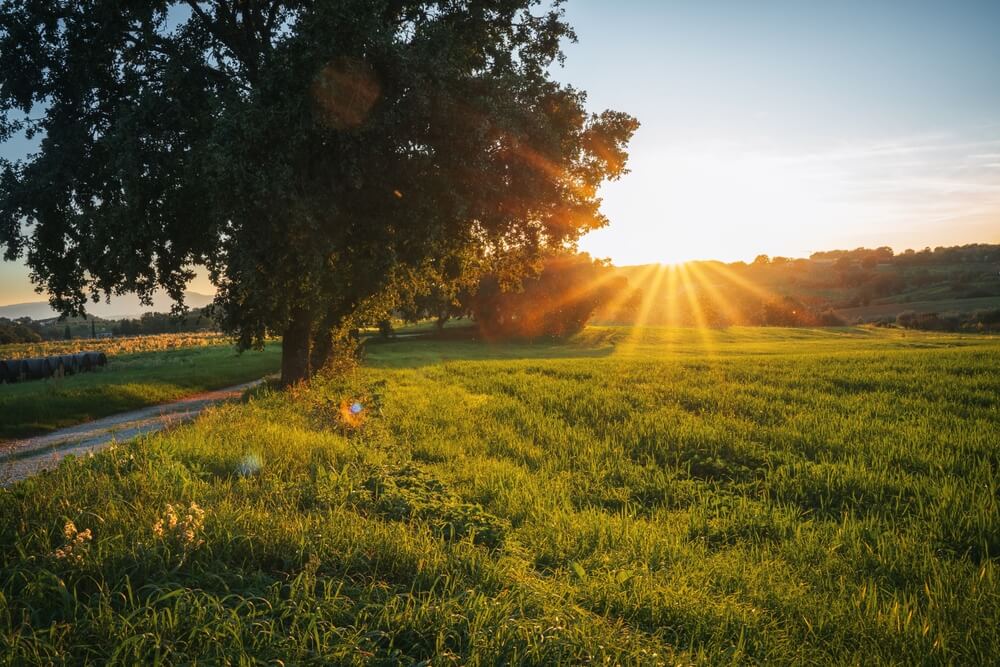
We also love Umbria in the Summer. Those enjoying a villa holiday in Umbria in the Summer will be rewarded with plenty of beautiful sunny days. If you want to enjoy time relaxing poolside at your Umbria villa, visit in July and August. Average high daily temperatures in this month sit at 29°C. These are the busiest months for holidaymakers but, even when numbers are at their peak, Umbria’s towns and villages never seem to experience the crowds of tourists that neighbouring Tuscany does. These are also great months for music lovers to enjoy a holiday in Umbria, since Umbria Jazz and Trasimeno Blues both take place at this time.
Don’t rule out visiting Umbria in the Winter either. You will find some hotels and restaurants closed in Umbria’s tourist hotspots. But there will still be plenty open and it’s an opportunity to experience the region at its most authentic. Choose the location for your Umbria villa holiday carefully. Opt to stay in Spello, for example, and you will find the majority of restaurants stay open. In fact, it’s a great time to try the year’s new olive oil and to sample the truffles.
January is the coldest month, with daily highs averaging just 9°C. Temperatures in February are similar but typically there is less rainfall than in January when you should be prepared for rain on 50 per cent of days. If you don’t mind wrapping up warm, this is certainly the time to explore Umbria without the crowds. You can expect major sites such as the Basilica in Assisi (or Umbria’s six other UNESCO World Heritage sites) to be relatively deserted. And at the end of February, the black truffle season kicks off in Umbria with the Nero di Norcia.
How many days do you need in Umbria for a luxury holiday?
Whilst Piedmont is the birthplace of slow travel, Umbria could just as easily hold that crown. With visitors traditionally coming to the region as part of the camino, to rush through Umbria feels like a bit of a travesty. However, we understand that in the modern world our trips sometimes have to be limited to a few days so we have come up with some Umbria itineraries to suit all different lengths of trips.
We think every Umbria Itinerary should include Assisi. Even travellers with no religious affiliation will feel the strong sense of spirituality which runs deep through Assisi’s heart. We also think a trip to Umbria must also include at least one day (and a night really) in Spello. While Spello has less official religious history than Assisi, over the years we have definitely built a connection with Spello and often rate it as one of our favourite towns in Italy.
At Bookings For You, we’ll happily help create a bespoke itinerary for your Umbria villa holiday. After all, an itinerary will vary dependent on the location of your villa in Umbria and whether this is your first visit or whether you’re returning seasoned holidaymakers.
3 Days in Umbria
Umbria lends itself quite well to a mini-break. As one of Italy’s smallest regions, hopping between some of its stunning hilltop towns is easily done in just a few days. Ideally you would fly into Perugia and spend your first morning here. Spend your time wandering through the historic centre, taking in the Fontana Maggiore, Piazza IV Novembre and the impressive Rocca Paolina. If you enjoy museums, the National Gallery of Umbria is well worth a visit.
We then recommend making Spello your base for spending 3 days in Umbria. By opting to stay in a villa or apartment in Spello itself, not only will you be in one of Italy’s prettiest hilltop villages but you will also be perfectly positioned in the region to discover the world-renowned vineyards and majestic countryside.
After a day discovering Spello’s magic, our advice is to take the train over to Assisi – it’s just a 30 minute journey. Alternatively, you can easily cycle between the two. Spend the afternoon wandering the picturesque streets and enjoy the calm as the sun begins to set and Assisi’s many day trippers leave.
While it may be tempting to rush through the region and try to see it all, this is not what we recommend. Umbria is not designed to be hurried. By choosing one corner of the region to explore on an Umbria mini-break, you will enjoy it much more and we have no doubt that you will return to discover more of this stunning region in Italy.
5 Days in Umbria
With five days to enjoy Umbria, you will have enough time to see more of what the region has to offer. Again, ideally you will arrive into Perugia and use the first morning of your trip exploring Umbria’s capital. Basing yourself in Spello is still an excellent choice for a 5 day trip to Umbria. Perfectly positioned between Perugia, Assisi and Spoleto, not only is it very well connected but it’s also the perfect place to return to after some exploring for a relaxing, authentic Umbrian evening. Spello itself is one of the region’s most charming towns, so we recommend allowing time to enjoy it properly.
Assisi will be on any Umbria itinerary and quite rightly so. If you have 5 days in Umbria we recommend spending at least 1 day in Assisi. In the morning, visit the Basilica di San Francesco, one of Italy’s most important religious and artistic sites. Allow time to explore the Upper and Lower Basilicas and then wander through the medieval streets towards Piazza del Comune.
In the afternoon, walk or drive up to the Rocca Maggiore for panoramic views across the Umbrian plain. Return to Spello in the early evening, stopping along the way if the mood takes you for a countryside aperitivo.
Combining a trip to both Spoleto and Trevi is an excellent idea if you are short on time. They are just 12 miles apart. If you can make it to Trevi in the morning, you will see this magical hilltop town in the calm of sunrise and there are some excellent cafes in which to enjoy a morning espresso and cornetto. Then head over to Spoleto – a much larger town – for a day of exploring.
While you may feel that you can fit more in during 5 days in Umbria, once again we would advise against over scheduling your time. Umbria is not meant to rushed.
A week in Umbria
Having the pleasure of a week in Umbria, is long enough to see the region’s main attractions. Again we recommend flying into Perugia (or arriving there by train) and spending your first morning exploring the city. However, with 7 days in Umbria, we would recommend choosing a villa in Umbria with a pool – especially if you’re travelling during the summer months. Not only will this give you a sanctuary to return to after a day of exploring, but it also gives you the option of spending a morning or afternoon relaxing poolside.
In addition to the places listed in the 5 day itinerary above, we also recommend the addition of a day in Gubbio – especially if you’re staying in the north of the region or or a trip to the magnificent Lake Trasimeno. However, if you’re based further south, consider Orvieto. Both sit close to the border with Tuscany so it’s also a viable option to head over to Tuscany to do some exploring there too.
With 7 days in Umbria, you must also make time for a wine tasting at one for the region’s highly acclaimed vineyards. Most hosts also offer a light tasting menu to enjoy alongside the wines. Umbria’s wine makers are incredibly knowledgeable, with vineyards often having been passed down in families from generation to generation.
10 Days in Umbria
10 days in Umbria is ample time to explore the region without feeling rushed. We recommend factoring at least a day or two to sit back and relax at your villa in Umbria. Why not take relaxing to the next level and let us arrange for a private chef to come and take over the cooking duties? Or enjoy a wine tasting in the comfort of your own private villa. With 10 days in Umbria, you can enjoy everything on the 5 and 7 day itineraries but also make an extended trip to one of the region’s stunning towns or spend a full day in the Monti Sibillini National Park.
If you are based near the Tuscan border it’s also an opportunity to discover another Italian region. Likewise, if your base is in the south of Umbria, the journey to Rome by train from Terni is only just over 1 hour. Umbria’s central location in Italy really does lend itself to the ease of seeing yet more of our favourite country in the world.
14 Days in Umbria
With 14 days to enjoy in Umbria, we would recommend either choosing two bases or opting for a villa in Umbria with a central location. Choosing one base near to Spello is a good idea so you can experience Spello’s beauty and charm first hand and also take advantage of the good transport links by both rail and road to the surrounding countryside and nearby towns.
For a second base, we would either recommend opting to stay in a villa in the magnificent Umbrian countryside and enjoy some time immersed in nature or head to Orvieto to experience a very different Umbrian town with easy reach over the border to Tuscany. This will also give you a chance to explore the south of the region too. Again though, try to resist the temptation to see it all. Rushing through a list of the top ten places to visit in Umbria is no way to really enjoy the region. Try to plan logical day trips as we’ve suggested above where you may visit one or two towns or attractions in one day leaving you plenty of time to relax too.
A Month in Umbria
The privilege of a month in Umbria allows you to completely immerse yourself in Umbrian life. Of course, you’ll want to visit the region’s famous towns and cities, but don’t rush. Spend mornings shopping at local markets, getting to know seasonal produce and prepare simple meals at your Umbria villa using olive oil from nearby groves.
Each town and village will have a weekly market. In Perugia, the Mercato Coperto is worth visiting. Situated just off the Piazza Matteotti, the permanent food market is a great place to stock up on supplies! Terni also has a permanent daily market. In Assisi, you’ll find a market every Monday morning, in Gubbio it’s on a Tuesday and on Thursday you’ll find markets in both Orvieto and Citta di Castello. Orvieto also has a market on a Saturday too whilst on Sunday you’ll find one in Spoleto.
Later in the day, get into the rhythm of Umbrian life and join the locals for a daily passeggiata and enjoy an aperitivo in a neighbourhood bar where you’ll quickly become a familiar face.
Over the course of a month, you can explore Umbria’s towns and villages in more depth than an average tourist. Take time to get to know the towns and cities – try to return more than once to each. Rather than ticking off sights, slow down and enjoy the rhythm of each town. Choose to visit museums one day, attend a festival another, or simply sit in a piazza and observe daily life. With time on your side, even the smallest villages reveal their charm. In fact these are often the most charming places in Umbria.
A month in Umbria allows for balance. Try to alternate sightseeing days with quieter ones spent at your Umbria villa, reading, swimming or simply enjoying the view. At Bookings For You, we would be delighted to help create a bespoke itinerary for your month long Umbrian escape. Whether you’re visiting for the first time or returning to a region you already love, we can tailor recommendations around the location of your Umbria villa and your personal interests, helping you make the most of this truly special experience.
Luxury holidays in Umbria for...
Umbria is incredibly diverse. With stunning countryside and some of the most magical hilltop towns in Italy, it ticks so many boxes that a holiday in Umbria can have a very broad appeal. Making it easy for us to put together some great ideas about the best Umbria holidays for different travellers.
For Couples
We think Umbria is one of Italy’s most romantic regions, even if it often flies under the radar when compared to more popular destinations such as Tuscany or the Amalfi Coast. However this is exactly what we think makes it perfect for a romantic retreat. For many couples, Umbria’s appeal lies in its quiet beauty and timeless towns. Umbria is authentic and perfect for couples seeking a romantic escape that feels unhurried and intimate. And, don’t forget that Umbria was the birthplace of Saint Valentine!
Stroll hand in hand through Spello’s ancient lanes, where flower-filled balconies, stone archways and sweeping countryside views create the perfect backdrop for romance. Be sure to enjoy long lunches in sun-drenched piazzas, lingering over local wine and delicious Umbrian specialities. At Bookings For You we have some beautiful apartments in Umbria perfect for couples to retreat to after a day of discovering this magical region.
For Families
Umbria should be high on your list if you’re travelling to Italy as a family, particularly during European school holidays. Often overshadowed by Tuscany, the region remains far less crowded and refreshingly authentic, making it an ideal destination for families seeking space, value and a slower pace of travel. With fewer tourist traps and a strong sense of local life, Umbria offers children and adults alike the chance to experience ‘real Italy’.
The region’s variety makes it especially well suited to family travel. Explore medieval hill towns or enjoy easy walks around Lake Trasimeno. Be sure to spend some time outdoors cycling, hiking or picnicking in the beautiful countryside. There are also plenty of hands-on experiences to enjoy together, from cooking classes to boat trips and festivals in small villages. Family is at the heart of every experience in Umbria. But make sure you save some time to relax and reconnect at your Umbria villa – the perfect place to make memories to last a lifetime.
Solo Travellers
As one of Italy’s spiritual heartlands, Umbria is very popular with pilgrims making their way to Assisi. As a result, there are many solo travellers in the region and it’s perfectly set up for those looking to discover Umbria alone. However, not every solo traveller in the region is a pilgrim and there are some amazing experiences which you can join to meet like-minded people. From cooking classes to wine tastings and guided walks – there is something for everyone. But, equally Umbria can be the perfect place to come to for solitude. The countryside can be majestically silent – peace and quiet perfection.
For Groups
With something for everyone, Umbria is perfect for a multi-generation holiday or for larger groups of friends looking for an authentic Italian holiday.
Renting a villa in Umbria in the heart of the countryside is a great option for gatherings of friends or extended families. You’ll be able to enjoy the privacy and space that a self-catering villa offers whilst enjoying the wealth of cultural attractions that Umbria has to offer. Villas in Umbria with pools and expansive gardens are the perfect setting for a memorable group stay. Plus, they tend to offer much better value for money than Umbria’s more famous neighbour, Tuscany. We recommend hiring a private chef to cook for you so that everyone can put their feet up and relax.


Ready to plan your luxury holiday to Umbria?
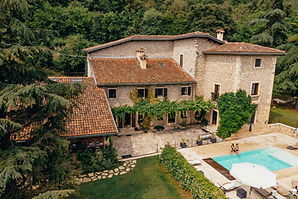
Ultimately, an unforgettable trip to Italy’s “Green Heart” starts with finding your ideal retreat, a place to unwind after a day exploring medieval hilltop towns and rolling olive groves. Whether you dream of waking up to panoramic views of Lake Trasimeno, sipping local Sagrantino wine on a secluded terrace, or lounging beside a private infinity pool tucked into the serene Umbrian hills, we have handpicked the region’s finest properties for your stay.
Explore our exclusive collection of luxury villas in Umbria to discover your perfect home away from home. If you’d like tailored recommendations or have any questions, feel free to get in touch with our team, we’re always happy to help!