





Where to stay on a luxury holiday in Umbria
Cities and towns in Umbria
Unlike in neighbouring Tuscany where city skylines are instantly recognisable, Umbria’s towns and cities are celebrated instead for their understated beauty and rich historical character. Instead of grand skylines, you’ll fine medieval walls and a strong sense of tradition and continuity with the past.
Luxury holidays in Assisi
Introduction to Assisi
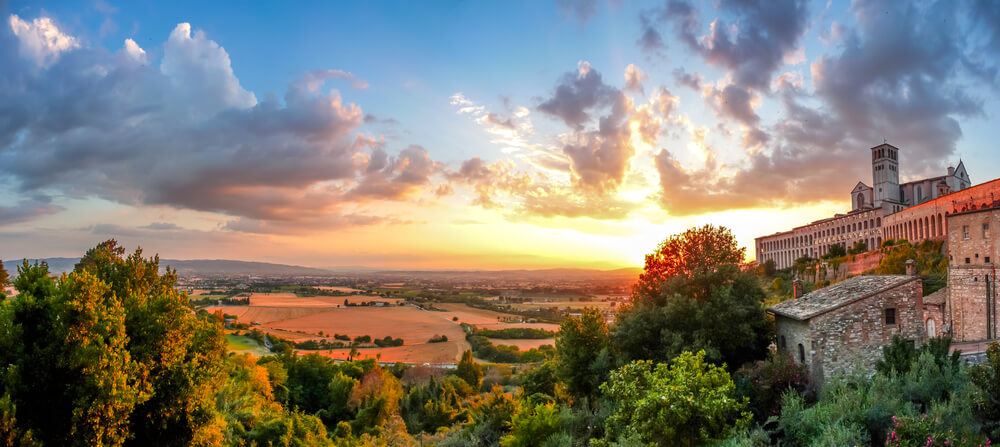
As the birthplace of St Francis, Assisi is world-renowned for being the central stop on the Via di Francesco Camino from Florence to Rome. Saint Francis remains a patron saint of Italy and in 2000, UNESCO designated the Franciscan structures of Assisi as a World Heritage Site.
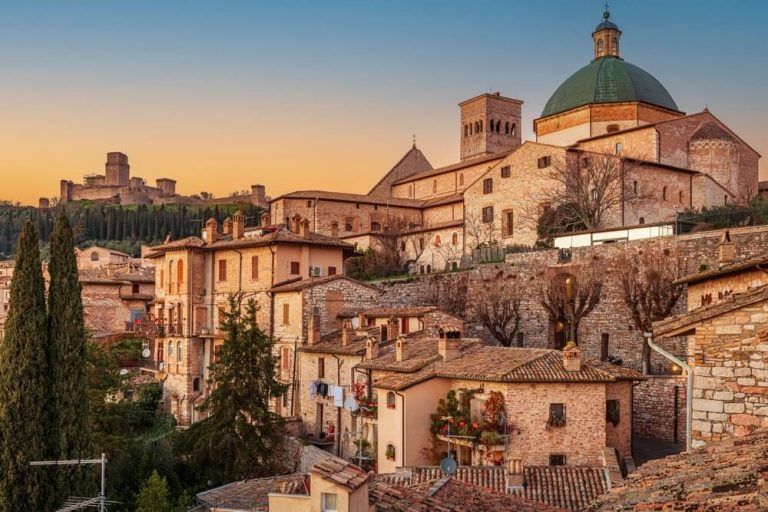
Set high on the slopes of Monte Subasio, Assisi is timeless and there’s nothing like gazing at its pale stone buildings glowing softly in the changing light. Best known as the birthplace of Saint Francis, Assisi blends deep religious significance with medieval charm, creating an atmosphere that is both contemplative and welcoming. Its historic centre, largely unchanged for centuries, invites visitors to slow down and experience Umbria at its best.
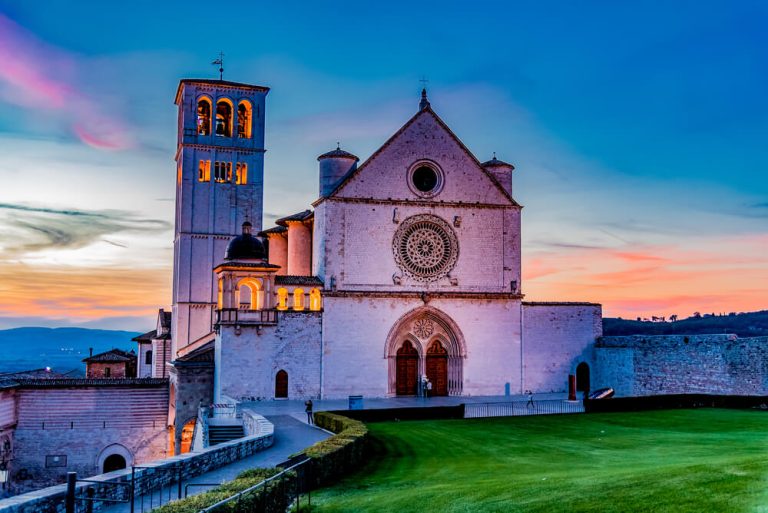
However, when we think of Assisi, we think of one thing above all else: Saint Francis. Pilgrims from all over the world are drawn here to visit the Basilica di San Francesco, one of Italy’s most important religious monuments. The basilica is divided into two levels, both lavishly decorated with fresco cycles that include works attributed to Giotto which vividly depicts the life of the saint.
Beyond Saint Francis, Assisi is also closely associated with Saint Clare, another key figure in the city’s spiritual history. The Basilica of Santa Chiara houses her tomb and offers sweeping views across the lush valley below. Unsurprisingly, throughout the year, Assisi hosts religious celebrations, processions and feast days that gently animate the streets while preserving the town’s peaceful character.
History lovers should also take time to explore the Rocca Maggiore, the imposing fortress that overlooks Assisi from above. The climb is well worth the effort, rewarding visitors with panoramic views across Umbria’s rolling countryside.
Tips for navigating the city
Assuming that you’ll spend most of your time in the historic centre, Assisi is small enough to explore almost entirely on foot. The town’s streets wind gently up and down the hillside, passing through picturesque medieval archways and quiet piazzas. Be aware that while Assisi is less sprawling than some Umbrian hilltop towns, its lanes are often sloped, uneven and cobbled, so comfortable, supportive footwear is strongly recommended.
If you’re arriving by train, Assisi station is located in the lower town of Santa Maria degli Angeli. From here, frequent local buses make the uphill journey to the historic centre. These are easy to navigate and will drop you near the main entrances to the old town. Taxis are also readily available and are a good option if you’re travelling with luggage or prefer a quicker ascent.
Within the historic centre itself, walking is by far the best way to get around. Most major sights, including the Basilica of San Francesco, Piazza del Comune and the Basilica of Santa Chiara, are connected by pedestrian-friendly routes. While there are occasional short but steep climbs between landmarks, the town’s compact layout means you’re never far from your next stop or a café where you can pause for refreshment and take in the view.
If you choose to drive to Assisi, it’s important to be mindful of the ZTL (limited traffic zones), which are strictly enforced. Parking is available in several pay and display car parks just outside the historic centre, such as those near Piazza Matteotti or Porta Nuova. From here, you can walk or use short shuttle connections into town. As always, it’s wise to check parking availability and any temporary restrictions in advance, particularly during religious festivals or peak travel seasons.
Accommodation and dining recommendations
If you plan to stay overnight in Assisi, there are plenty of accommodation options on offer. These include hotels in Assisi, B&Bs as well as a good selection of apartments too. Just be aware that, whatever option you choose, you will need to pay a tourist tax. In Assisi, like everywhere in Italy, the tourist tax applies to all accommodation but the amount due depends on the type and rating of your hotel or holiday rental. Typical costs are between 1.50 and 4 euros per person per night. The tax applies to all visitors aged 14 and over and it is applied for a maximum of four consecutive nights. Alternatively, given how easy it is to reach Assisi by public transport, you could also opt to stay in an Umbria villa in the beautiful surrounding countryside. Villa Assisi is an excellent option. Just 6 kms from the centre of Assisi, it’s the perfect place to use as a base to explore the area.
Like every town or city in Umbria, Assisi offers something for everyone in terms of dining options. For excellent food and top standard service too we love Il Baccanale. Perfect for lunch or dinner, it’s a great place to try some of the finest dishes the region has to offer. Another favourite is Taverna Magna Comunis, perfect for dinner but also a great spot for an evening aperitivo. This is mostly due to the restaurant’s prime position in the Piazza del Commune – one of Assisi’s best people watching spots.
Our favourite option for a coffee or delicious sweet treat is Pasticceria Sensi. The pastries and desserts are really special and worth the wait in the queue which can often be found at this ever popular coffee shop.
Luxury holidays in Gubbio
Introduction to Gubbio
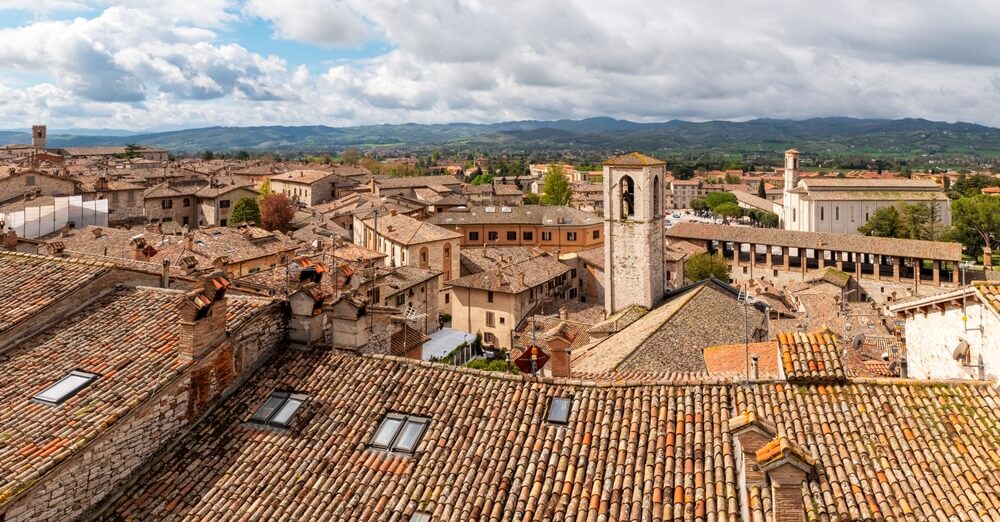
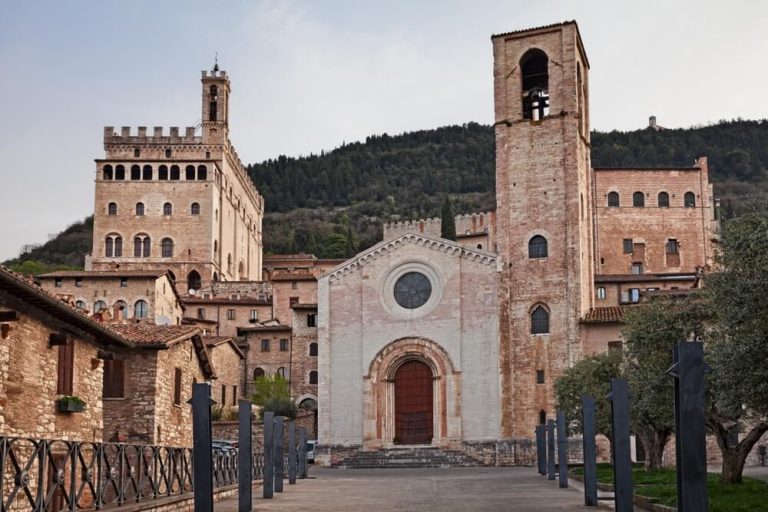
Perched on the slopes of Monte Ingino in northern Umbria, Gubbio is one of the region’s most atmospheric and best preserved medieval towns. Just under an hour’s drive from Perugia, it’s easy to reach yet feels wonderfully removed from the more well known Umbrian tourist hotspots. With magnificent stone buildings, steep winding alleys and dramatic vistas, Gubbio offers travellers a deep sense of history and an unmistakably Umbrian experience.
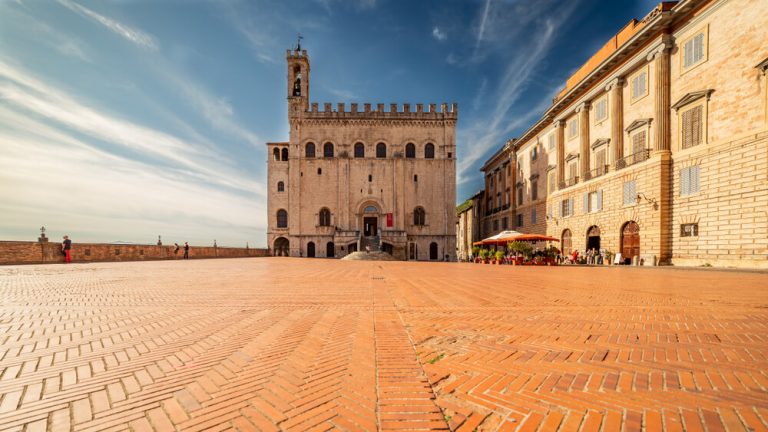
At the heart of the town is Piazza Grande, one of Umbria’s most striking squares, which feels almost suspended above the valley below. This is where you’ll find the Palazzo dei Consoli, Gubbio’s most iconic building and a powerful symbol of the town’s medieval independence. From here, the views across the Umbrian countryside are nothing short of spectacular.
Gubbio is known for its remarkably well preserved medieval centre, where grey limestone palazzi climb the hillside in layered terraces. Walking through the town feels like stepping back in time, with narrow alleyways opening onto grand civic buildings and quiet piazzas. Despite its historical weight, Gubbio has a relaxed, lived-in feel that makes it easy to settle into and explore at an unhurried pace.
Gubbio is also a town of deep rooted traditions, most famously the Corsa dei Ceri, a centuries old festival held each May that brings the entire town together in a powerful display of community spirit. This strong sense of identity is felt year round, giving Gubbio a character that is both authentically local and welcoming to its visitors.
If you have time, make your way up Monte Ingino to visit the Basilica of Sant’Ubaldo, home to the town’s patron saint. Whether you reach it on foot or via the cable car, the journey is rewarded with sweeping views over Gubbio and the beautiful Umbrian landscape beyond. We particularly love it at sunset, when the town below glows softly in the fading light.
And finally, just outside the historic centre lies Gubbio’s Roman Theatre, a remarkably well-preserved site dating back to the 1st century BC. It’s a peaceful spot to visit and offers a fascinating contrast to the medieval town above.
Tips for navigating the city
Gubbio is a fairly small hilltop town and can be explored in a day. All of the main attractions are easily discovered on foot. Simply wandering the alleys and piazzas is the best way to discover the magic of Gubbio. But be prepared for a bit of a workout! The centre is built on a steep gradient and can be physically demanding in places, particularly as you move away from the lower parts of town towards the Piazza Grande and beyond. Gubbio climbs the lower slopes of Monte Ingino, with long inclines, stone staircases and narrow, uneven streets throughout its centre so comfortable walking shoes are essential.
One of the easiest ways to reach the upper part of town, or to head up to the Basilica di Sant’Ubaldo, is via the funivia (cable car). These small, open cages are a uniquely Gubbio experience and make the climb far more manageable while offering wonderful views along the way.
Cycling into Gubbio is possible but only recommended for experienced riders. The climb is long and sustained. As with many Umbrian hill towns, the effort is rewarded once you arrive, but it’s not a route for beginners.
If you’re arriving by car, there are several car parks at the lower edge of the historic centre, making it easier to explore on foot without navigating the narrow streets. Be mindful of the ZTL zones, which are clearly signposted and strictly enforced. During festivals, particularly around the Corsa dei Ceri in May, access and parking restrictions can change, so it’s worth checking local information in advance.
Gubbio does not have a train station but is served by a regular bus service from other towns in Umbria, including Perugia. It is also on the main bus route from Rome to Ancona.
Accommodation and dining recommendations
We love Gubbio, and as fans of authentic Italy, it is one of our favourite towns in Umbria. However, we don’t think it’s necessary to stay in the centre of the town to enjoy all it has to offer. Given that it’s so easy to reach from the surrounding countryside, we recommend finding an Umbria villa rental outside the city. The countryside around Gubbio is nothing short of spectacular. If you’re travelling in the height of the summer, then our advice is to find somewhere with a pool to cool off after a day of sightseeing in Gubbio or its neighbouring hilltop towns. Discover our full collection of Umbria villas and apartments with pools.
At just 10km from the centre of Gubbio, Apartment Allora is the perfect choice. Guests can tuck into a delicious daily breakfast which is included in the rate. And, as part of a small collection of apartments on the same site, it’s ideal if you’re travelling in a larger group of friends or extended family.
Wherever you decide to stay, dinner in Gubbio – or at least a long lunch – is essential when visiting the area. Taverna del Lupo is a favourite of ours and a true local favourite too. With its rustic interiors and traditional Umbrian menu, it’s a great place to try regional specialities. The portions are generous, the service welcoming, and the experience authentically Gubbio.
For a glass of wine or a light bite be sure to visit Martintempo Lounge Experience. This is a relaxed bar with the perfect balance of sophistication and Umbrian welcome. There is often live music, but the main event here are the cocktails – they are perfetto!
For an unpretentious and delicious gelato, head to La Gelateria on Via della Repubblica. Don’t be fooled by the understated exterior. Inside you’ll find a treasure trove of delicious gelato from traditional chocolate and pistachio to more adventurous creations. They also serve frozen yoghurt, if you fancy a change from gelato.
Luxury holidays in Orvieto
Introduction to Orvieto
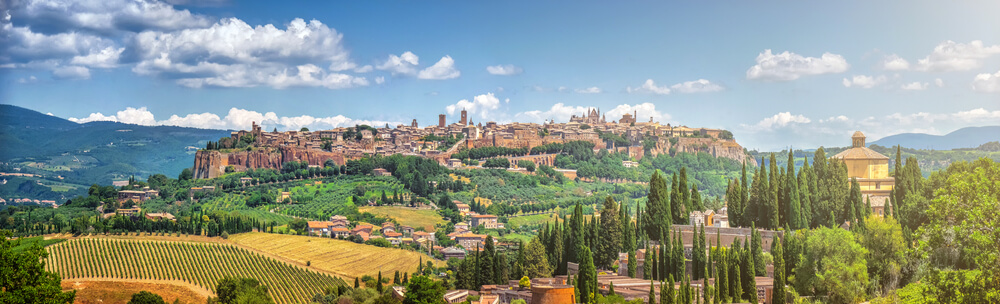
Situated in the province of Terni in the South West of Umbria, Orvieto is one of Umbria’s most beautiful cities. Perched on tufa (limestone) rocks, Orvieto is famous for its wine, umbricelli pasta, black truffles and olive oil, as well as being rich in art and architecture.
Please note: There is a more modern lower part constructed after WWII which doesn’t have the same shine to it so we recommend sticking to this elevated old town.
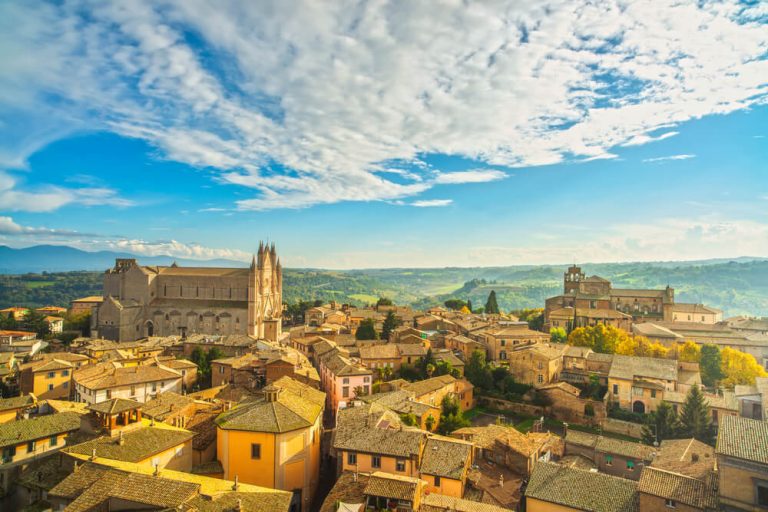
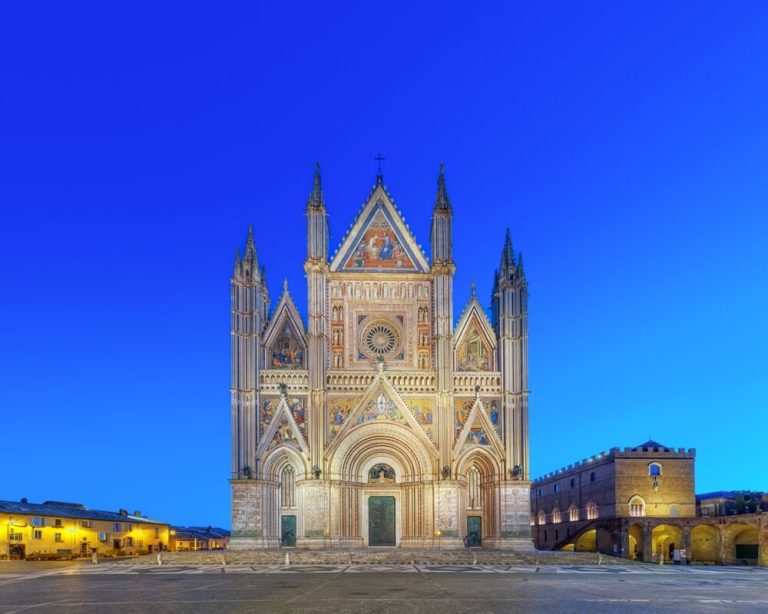
Orvieto is a town where you could lose yourself for hours just exploring its charming streets, browsing the independent shops and admiring its stunning churches and historic palaces. However, Orvieto’s 14th century Duomo is its most famous sight. This impressive spectacle is arguably one of the greatest Gothic buildings in Italy but it does also have Romanesque influences. Its facade is simply stunning. It is decorated with a series of mosaics which tell the story of the Virgin Mary.
Inside the Duomo, there are some beautiful frescoes by Luca Signorelli in the San Brizio Chapel (Cappella di San Brizio) depicting the Last Judgement. There are also some important sculptural masterpieces including the statue of Pietà by Ippolito Scalza, created from a single block of marble, as well as two important statues crafted by Francesco Mochi in the early 600s.
For a completely different perspective on Orvieto, make your way to the Torre del Moro. Visitors can climb its steps to reach a spectacular terrace where you can enjoy 360 views over Orvieto and beyond. Be prepared to take your time as you make your way up though. In total there are 236 steps to climb. There is a lift, but it will only take you part of the way, stopping at the second level and still leaving you with 160 steps left to conquer! The bell at the top rings every 30 minutes.
However, our favourite of Orvieto’s towers is the Torre di Maurizio, with its beautiful clock face. Look to the top of this working medieval tower to find the bell and bronze bell ringer (Maurizio) flanked by a pair of smaller bells, all on stilt-like legs. The clock originally served to provide those working on the construction of the Duomo with the time and it still works perfectly today – sounding every hour on the dot.
Finally, don’t miss out on the opportunity to explore what is right under your feet in Orvieto too. The Grotta della Rupe is a quite extraordinary series of caves, cellars, aqueducts, quarries and tunnels that visitors can enjoy a tour of today. In total over 1200 caves have been discovered and 440 of which can be visited. Some of these date as far back as the Etruscan period.
The history of this network of tunnels is fascinating. A guided tour will give you a glimpse into the varied uses they have had over the years. These include being used as bomb shelters during WWII to being a place to keep pigeons and to press oil in earlier times. Additionally, you must also visit Pozzo della Cava and St Patrick’s Well (Pozzo di San Patrizio). Both are open to visitors. The smaller of the two – the Pozzo della Cava – is a hand dug well, measuring 36 metres deep. Visit at Christmas time and you can witness the annual Nativity in the Well, a charming mechanised nativity scene. St Patrick’s Well measures approximately 175 feet deep and 45 foot wide.
Tips for navigating the city
Orvieto’s historic centre is perfectly self-contained and ideal for exploring on foot. Once you reach the top of the tufa rock on which the city sits, everything of interest – from the Duomo to the quieter backstreets – is within easy walking distance.
Getting up to Orvieto is part of the experience. The funicular railway from Orvieto Scalo (the more modern part of town) makes the ascent effortless and runs regularly throughout the year, connecting the train station with the upper town in just a few minutes. From the top station, local buses or a short walk will take you straight into the heart of the old town.
A word of caution, however, Orvieto’s streets are steep in places and often cobbled, so sturdy, comfortable shoes are a must. While the centre isn’t large, the inclines can be surprisingly tiring, especially if you plan on wandering for several hours. So make sure you factor in a stop or two for coffee and gelato.
Some cyclists do attempt the climb up to Orvieto, but like with the ascent to many of Umbria’s hill top towns, this is not recommended for the inexperienced. The gradient is long and demanding, and traffic can be unforgiving. But as with many Umbrian hill towns, the real reward comes once you’re at the top, where expansive views over the surrounding countryside await.
If you’re arriving by car, Orvieto offers several large car parks at the base of the town, including Campo della Fiera. From here, you can take the funicular or use elevators and shuttle buses to reach the centre. Be mindful of the ZTL zones, which are strictly enforced, and always check for temporary changes due to events or market days before travelling.
Accommodation and dining recommendations
Opting to stay in Orvieto can give you a chance to explore this magnificent city without having to rush through the many attractions. Our selection of centrally located villas occupy a stunning ancient palazzo and are the perfect choice for a central stay. Both Villa Orvieto and Villa Arrigo are finished to a very high standard and are a perfect example of chic modern facilities paired with perfectly restored original features.
If you prefer more space or are travelling in the height of the summer season, you may prefer to opt for a villa in Umbria with a pool in the surrounding countryside. These offer the perfect place to cool off and relax after a day exploring Orvieto.
If you can’t stay in the city itself, we do recommend heading into the centre for at least one evening. Orvieto is at its finest as dusk falls and locals and tourists mingle in the many cafes and bars as a preamble to a delicious meal in a local restaurant. Like everywhere in Italy, food is taken very seriously in Orvieto and we know you won’t be disappointed with what’s on offer.
For an evening meal or a leisurely lunch in Orvieto, we recommend Trattoria del Moro Aronne. This long-standing local favourite is all about traditional Umbrian fare. The menu changes with the seasons, but dishes featuring wild boar, truffles and handmade pasta are standout, and the atmosphere is warm, rustic and reassuringly relaxed.
Another excellent option is Trattoria La Palomba, particularly if you’re curious to try one of Orvieto’s most historic dishes: piccione alla leccarda (slow-cooked pigeon). It may sound adventurous, but this is one of the town’s signature recipes and La Palomba prepares it with great care and pride. The setting is intimate and could even be described as old fashioned, adding to the sense that you’re experiencing something truly local.
For a more casual lunch or relaxed dinner, Mezza Luna is a great choice. Known for its pizzas and relaxed vibe, it’s ideal after a day of sightseeing when you want something simple but satisfying.
For a sweet treat, make time for Gelateria Pasqualetti. Widely considered one of the best gelaterias in Umbria. Whether you opt for classic chocolate or seasonal fruit sorbets, this is the perfect stop for an afternoon pit stop or post dinner treat.
Finally, for a good glass of local wine or a pre-dinner aperitivo, we recommend Enoteca Al Duomo. Just a stone’s throw from Orvieto’s magnificent cathedral, it’s an atmospheric place to sample Umbrian wines and soak up the vibe of the town as evening settles in. It’s also the ideal way to round off a day in Orvieto.
Luxury holidays Perugia
Introduction to Perugia
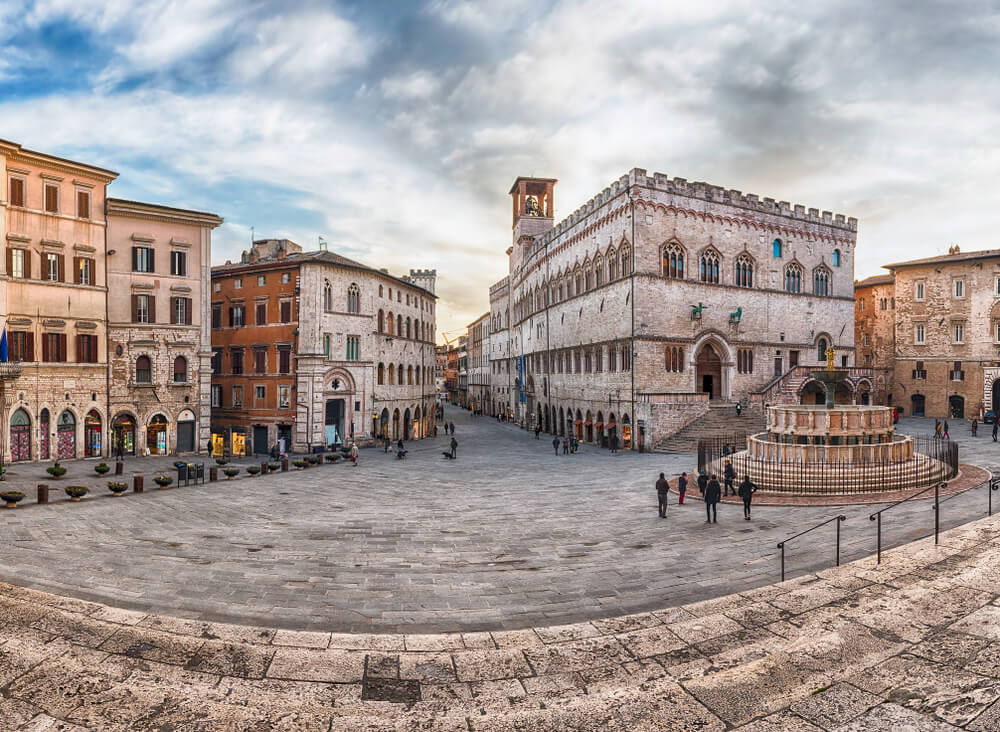
Perugia is a rich tapestry of art, history and culture. Umbria’s capital perfectly combines ancient history with laid back modern living. Its historic centre pulses with student energy thanks to the university, yet its architecture remains a testament to centuries of layered cultures: Etruscan, Roman, Medieval and beyond.
However, when we think of Perugia, we think of two things: jazz and chocolate! As home to Italy’s much loved Baci chocolate brand, Perugia offers many opportunities to enjoy chocolate delicacies at any time of year. But if you happen to be visiting during March or November, you’re in for a real treat. Perugia’s world famous Eurochocolate festival is the continent’s biggest chocolate festival and attracts nearly 1 million cocoa-loving visitors to Perugia’s ancient piazzas. There are chocolate art exhibitions, chocolate sculptures and even a chocolate day spa. But of course, there is also a lot of chocolate eating! The delicious legacy of this festival can be felt all year so don’t despair if you love chocolate and can’t plan your trip during the festival.
Not only is Perugia the capital of Umbria (and perhaps chocolate!) it’s also known as the capital of Jazz. As the main host city of Umbria Jazz each summer, Jazz can be felt all year round with concerts and performances taking place regularly. To read more about Umbria Jazz, Eurochocolate and many more Italian festivals and events click here.
Aside from the jazz and the chocolate, one of our favourite things to do in Perugia is to walk along the raised medieval walkway Via Dei Priori. This is a wonderfully immersive experience – it feels like you’re walking back in time amongst the ancient buildings which surround you on all sides.
Art lovers should also make visits to Palazzo dei Priori, home to the National Gallery of Umbria, and to Sala Del Cambio where you can admire the stunning frescos decorated by Pietro Vannucci. With so much art and history to take in, joining a walking tour with a local guide is the best way to get the most out of your day in Perugia. These can prove popular, especially in the summer months, so book your Perugia tour tickets in advance.
Tips for navigating the city
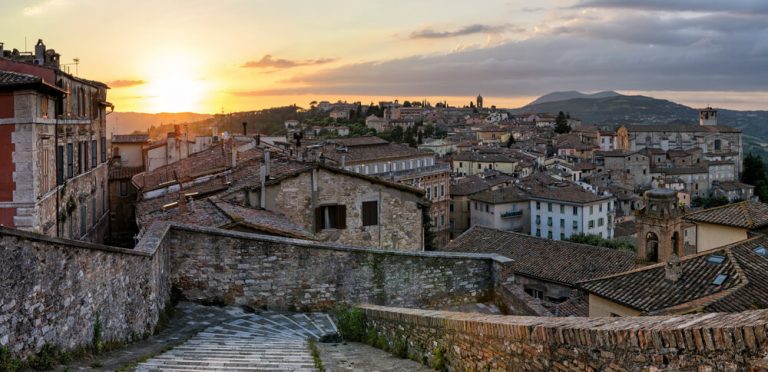
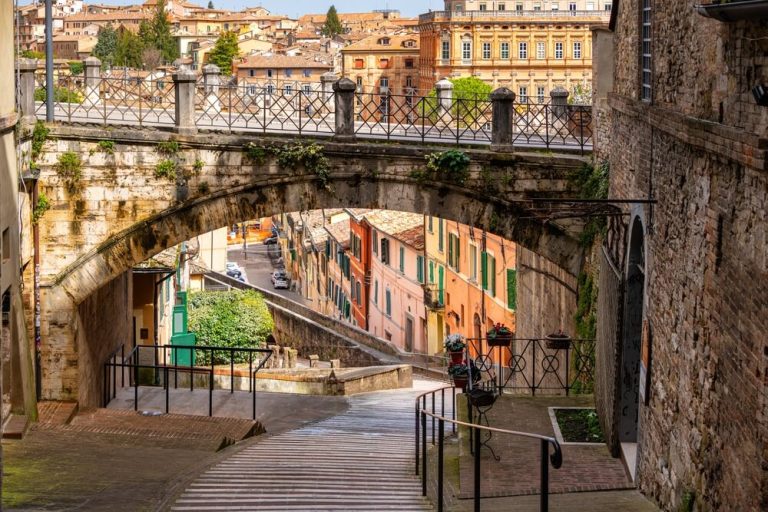
Assuming that you’ll spend most of your time in the historic centre, Perugia is compact enough to explore comfortably on foot. The streets twist and turn through medieval stone archways, revealing quiet piazzas and sweeping views when you least expect them. Just a word of caution: many lanes are steep, narrow, and paved with ancient cobblestones, so opting for sensible shoes is good advice.
To get up to the old town from the lower parts of the city, the MiniMetrò (Perugia’s automated light railway) is wonderfully efficient and runs throughout the year. It glides you from Pian di Massiano to the edge of the centre in just a few minutes, making the ascent painless.
Alternatively, the network of public escalators – most famously the ones rising through Rocca Paolina – offer an atmospheric (and surprisingly convenient) way to conquer the hill without breaking a sweat.
If you choose to drive into Perugia, be sure to park outside the ZTL to avoid fines. Large car parks such as Piazza Partigiani or Pian di Massiano offer easy access and connect directly to the escalators or MiniMetrò. Take care to double check opening hours or temporary closures before travelling, as local events and markets can occasionally affect availability.
Accommodation and dining recommendations
If you plan to stay overnight in Perugia, you’ll find a variety of accommodation options both within the historic centre and in the quieter neighbourhoods just beyond it. These range from boutique hotels to family-run B&Bs and self-catering apartments with sweeping views over the Umbrian hills. Whatever you prefer, just keep in mind that a tourist tax applies to all stays in the city. The amount varies depending on the type and category of the accommodation but typically is typically just a few euros per person per night. As in many Italian cities, the tax is usually charged only for the first handful of nights and applies to guests above a certain age, so it’s worth checking the exact details when you book.
Perugia is wonderfully easy to reach by car or public transport. So if you’re a fan of space and privacy, we recommend choosing an Umbria villa in the surrounding countryside. In the hills surrounding Perugia you’ll find some of our most stunning villas in Italy. We have something for everyone – large luxury multigeneration villas or smaller serviced apartments tucked into the idyllic Umbrian countryside. And pretty much everything in between. With wonderful gardens and pristine pools, a Bookings For You villa is the perfect place to relax and recharge after a day exploring Perugia.
When it comes to dining, Perugia has something for every appetite. Traditional trattorias serve rustic Umbrian dishes such as strangozzi with truffles, hearty stews, and locally cured meats, while modern cafés and wine bars offer lighter bites and excellent regional wines. Unsurprisingly, you’ll also find chocolate shops and pasticcerie throughout the centre.
One of our favourite spots for dinner is Ristorante Il Giurista. This is a haven for meat lovers and perfect for an authentic Umbrian meal. Set slightly below street level with ancient vaulted ceilings, this restaurant has the added bonus of remaining cool even in the warmest summer months.
For lunch we recommend La Bottega del Gusto. This is one of the most popular sandwich shops we’ve ever visited and we quickly discovered that it was for a very good reason. The sandwiches are delicious and very reasonably priced. There are just two stools inside so we recommend grabbing a sandwich and finding a perch in a nearby piazza.
Luxury holidays in Spello
Introduction to Spello
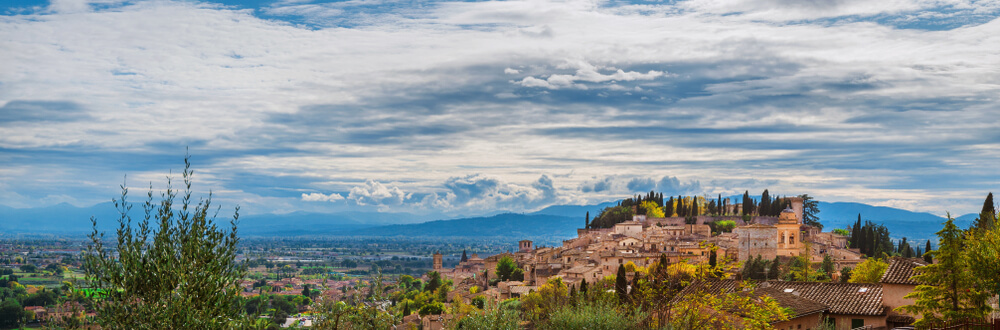
We’ve never made a secret of the fact that Spello is one of our favourite places in Italy. Perhaps the most charming hilltop town in Umbria, it has a long and rich history. A Roman colony from the 1st century BC onwards, Spello was believed to have been founded by the Emperor Augustus. Originally, the town was known as Hispellum. These days, Spello is encased in its Medieval walls but it’s still possible to see plenty of evidence of its Roman ancestors. A recent survey showed that 80 per cent of the buildings lie on Roman foundations and, as you wander around the town, many Roman remains still exist including the three Roman gates – Porta Consolare, Porta di Venere and the Arch of Augustus – along with the old Roman aqueduct.
The list of things to see and do in and around Spello is plentiful and it will take a good few hours to do justice to Spello’s beautifully quaint and historic centre. However, if you are spending a week here, there is more than enough to fill your time – both in Spello and further afield in the surrounding area. Read our extended guide of things to see and do in Spello.
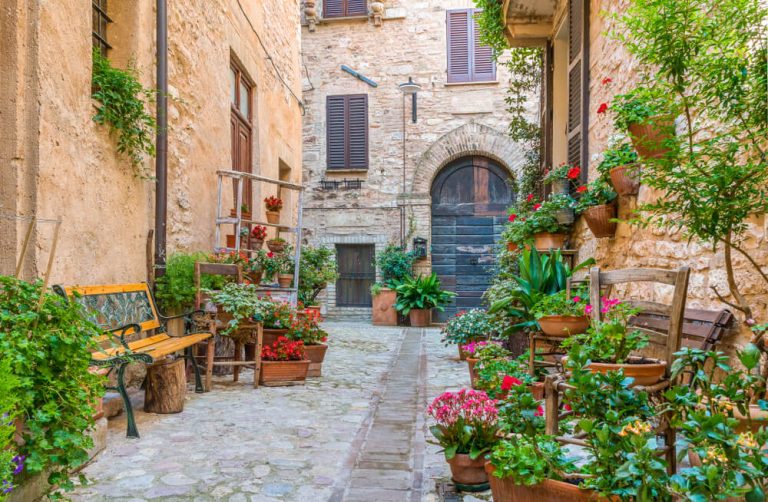
Spello’s most famous annual event is the Infiorata. The event dates as far back as 1831 and is held on the ninth Sunday after Easter to commemorate the Corpus Domini feast. Whilst Spello seems to be filled with flowers all year round, during the Infiorata, the town’s streets are literally paved with over sixty large flower murals. All constructed using flower petals, these carpet Spello’s narrow pavements and roads.
Tips for navigating the city
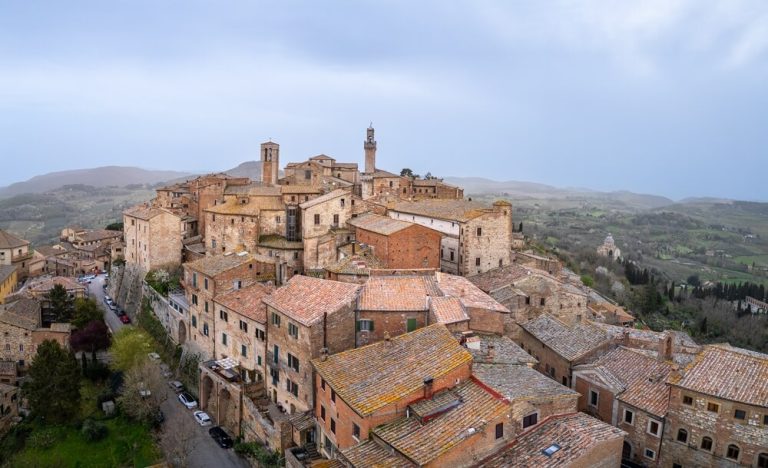
Navigating Spello is easy. You’ll be pleased to know that this Umbrian hill town is wonderfully compact and perfect to explore on foot. Once inside the historic centre, you’ll almost immediately be met with flower filled lanes, Roman arches and picture perfect corners that are all just a short stroll apart.
Spello’s streets are narrow, can be steep and are paved with uneven cobblestones. With this in mind, comfortable walking shoes are essential. You’ll be glad of them as you wander up and down the town’s terraced layout, especially in the warmer months.
Spello is popular with cyclists, particularly those tackling longer Umbrian routes, but be aware that the climb up into the town is steep and sustained. It’s best left to confident riders with a good level of fitness. The reward, of course, is arriving to sweeping views across the Valle Umbra and a well earned espresso in the town’s piazza.
If you plan to arrive by car, note that Spello has ZTL (limited traffic) zones in the historic centre. The most convenient option is to park in one of the designated car parks just outside the old town walls, such as Parcheggio della Porta Consolare or Parcheggio di Porta Venere, both within easy walking distance of the centre. As with many Italian towns, parking availability can change during festivals or market days, so it’s wise to check local notices in advance.
Accommodation and dining recommendations
Spello is the perfect choice for a villa holiday in Umbria. The town is laden with authentic Italian charm and oozes history from every ancient alley and hidden piazza. We are very lucky to have holidayed in Spello many times and have collected a wonderful selection of villas and apartments in Spello along the way for you to enjoy too.
One of our favourites is Villa Buonanotte Barbanera. Right in the centre of Spello, this stunning villa offers the best of both worlds: perfect views of the stunning Umbrian countryside from the private garden but it’s also just a few steps away from the buzz of Spello’s much acclaimed restaurants. Alternatively, you may prefer Villa Clara. This is another stunning three bedroom Umbria villa with its own private plunge pool.
Eating in Spello is a real treat. Over time, this relatively small town, tucked right in the centre of Italy, has become home to some of the finest dining options in Italy. One of our favourites for dinner is Il Pinturicchio, a traditional Italian restaurant, serving up excellent quality local food created by Mirko and his wife. It does have an outdoor terrace but it’s small so if you want to sit outside, make sure you book ahead. We recommend trying the tagliata di manzo. It’s worth noting that when we were last there the restaurant was closed on Sundays and Tuesdays.
However the star of the show in Spello has to be Osteria del Buchetto. A much smaller restaurant occupying a terrific position at the top of Spello, it enjoys views of Assisi in the distance. Make sure to book a table on the terrace to make the most of the stunning vista. The owner is incredibly friendly and, whilst he doesn’t speak much English, we feel that this only adds to the authenticity of the restaurant. You will experience a small but perfectly formed menu and absolutely delicious food.
For coffee, an aperitivo or a snack we recommend Bar Tullia. And for the finest pizza in Spello head to Il Vecchio Opificio. Whilst not much to look at, this restaurant serves up the best pizzas in Spello. It’s popular with the locals so even though there is plenty of seating, we recommend you book a table in advance.
Luxury holidays in Spoleto
Introduction to Spoleto
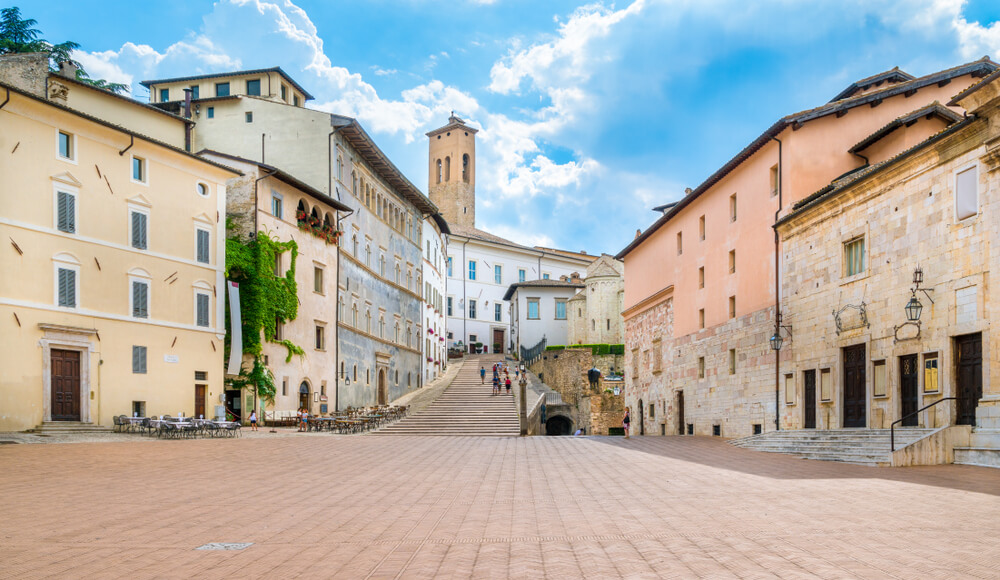
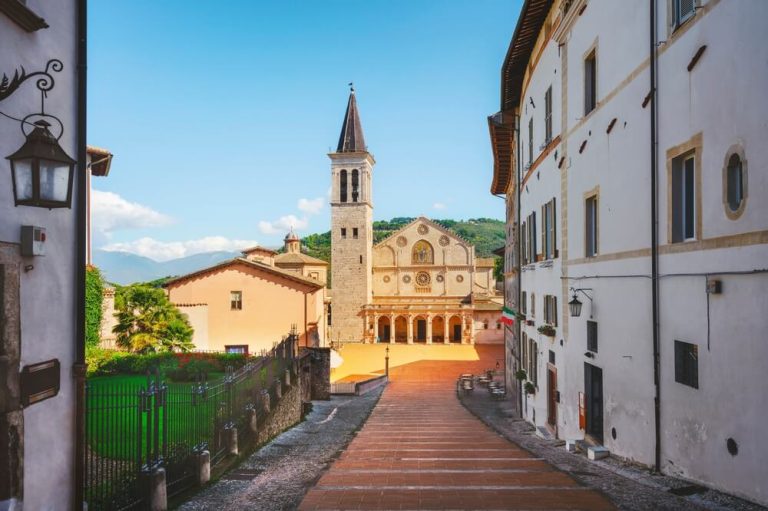
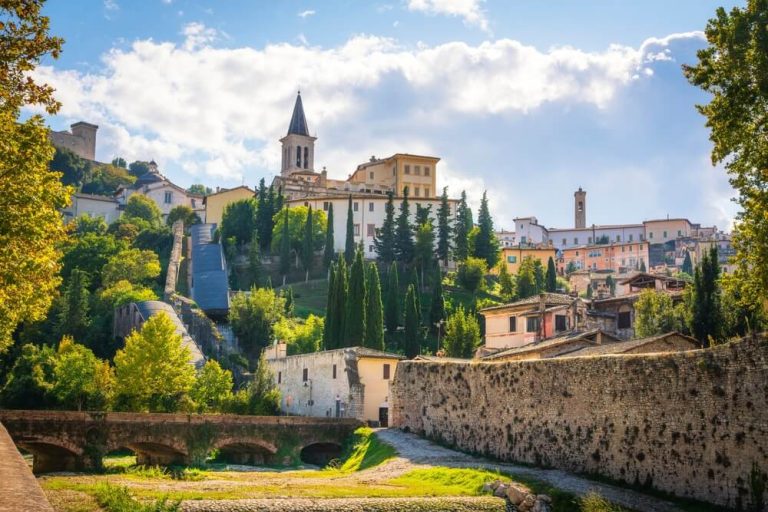
Situated on the foothills of the Apennine mountains, Spoleto is an ancient city in Umbria with much to offer visitors. From the spectacular sight of the Ponte delle Torri aqueduct to the impressive Duomo and the Rocca Albornoziana fortress, there’s plenty to see and do in Spoleto.
The city has a very interesting history. It first grew along the eastern branch of the famous Roman road leading from Rome across the Apennines to Rimini on the coast. As a result, the city is full of remains of its Roman past – from the 1st Century Ponte Sanguinario (the ‘bloody bridge’) to the 2nd Century Roman amphitheatre. Under Lombard rule, the town became the capital of the Duchy of Spoleto and ruled over a significant proportion of central Italy. Spoleto was later ruled by various Popes, fought over by the Guelphs and Ghibellines, and even Napoleon took charge until it was eventually captured and unified with the rest of Italy.
Today, Spoleto is most famous for the Festival dei Due Mondi (Festival of the Two Worlds), which was founded in 1958. The concept behind the festival name was to showcase American and European culture within the same event, emboldened by a sister event held in South Carolina. Over time, the event has evolved into a three week festival of art, music, drama, and dance.
Tips for navigating the city
Spoleto’s historic centre is compact enough to explore with ease on foot, and walking is by far the best way to appreciate the town’s layered history and beautiful viewpoints. Once inside the old town, most sights are close together, although the terrain can be more challenging than it first appears.
Spoleto is built on a hillside, so expect steep streets, lots of steps and uneven cobblestones throughout the centre. Comfortable walking shoes are essential, especially if you plan to visit landmarks such as the Duomo or wander up towards the Rocca Albornoziana. The climbs can be tiring, but the views across the valley make every step worthwhile. We see it as another excuse to stop for a coffee or gelato to recharge.
To make getting around easier, Spoleto has an excellent free network of escalators and moving walkways that connect parking areas (lower down the hillside) with the upper parts of the town. These are incredibly useful and save a lot of energy, particularly in the height of the summer. They’re well signposted and simple to use, even if it’s your first visit.
Some cyclists do tackle the ascent into Spoleto, however we believe this is best left to experienced riders. The climbs are steep and continuous, and traffic can be challenging in places. As with many Umbrian hill towns, reaching the top is the hardest part. Once you’re up the hill, exploring is far more relaxed – although Spoleto’s cobbled streets are not very bike friendly!
If you’re arriving by car, there are several large car parks outside the ZTL, including areas near Piazza d’Armi and the main escalator routes. Always check signage carefully, as access restrictions are strictly enforced and can change during festivals or events, particularly during the Festival dei Due Mondi.
Accommodation and dining recommendations
While you can, of course, stay in the centre of Spoleto, given that it’s so easy to reach from the surrounding countryside, we recommend finding an Umbria villa rental outside the city. The countryside around Spoleto is some of the most stunning in all of Italy and we definitely recommend spending at least part of your Umbria villa holiday here. If you’re travelling in the height of the summer, then we recommend finding somewhere with a pool to cool off. Discover our full collection of Umbria villas with pools.
That said, if you do want to stay in the centre of Spoleto there is a reasonably good selection of hotels and B&Bs to choose from. Aiming to be as close to the centre of the old town as you can is good advice.
Wherever you choose to stay, you must make sure to spend at least one evening in Spoleto itself. As night falls, the city is illuminated, highlighting the very best of its historical features. Likewise, dinner in Spoleto mustn’t be missed. One of our favourite spots is Ristorante Il Tempio del Gusto. The menu leans towards tradition with a modern touch, making it ideal for a special dinner without feeling overly formal.
Another very good option is Trattoria La Torretta. Popular with locals, we recommend booking a table here in advance. The food is honest, generous and unapologetically authentic Umbrian. This is a great place to try regional staples such as strangozzi pasta with truffle or rich meat sauces, served in a cosy setting that feels wonderfully unchanged by time.
For something more casual, Osteria dello Sportello is an excellent choice. Tucked away on a quiet street, it offers simple, seasonal dishes and a laid back atmosphere that’s perfect after a day of exploring Spoleto’s riches.
For a sweet treat, pop into Gelateria Crispini. Well known across Umbria, this gelateria serves some of the best artisanal gelato in the region, made with high quality ingredients. It’s ideal for an afternoon pause or a post-dinner stroll through town.
Finally, for a very good glass of wine or an aperitivo, we recommend Il Mio Vinaio. This small, but perfectly formed wine bar focuses on natural and regional wines, and it’s the kind of place where one glass easily turns into two. It’s relaxed, friendly, and a perfect spot to soak up Spoleto’s evening atmosphere.
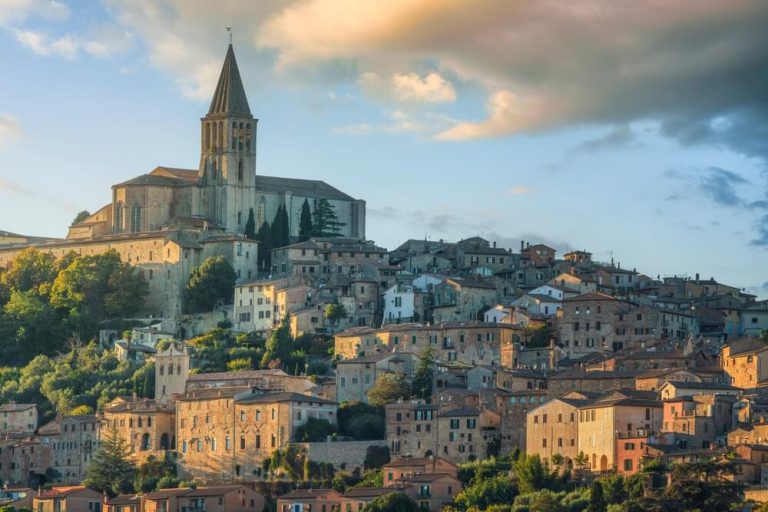
Luxury holidays in Todi
Introduction to Todi
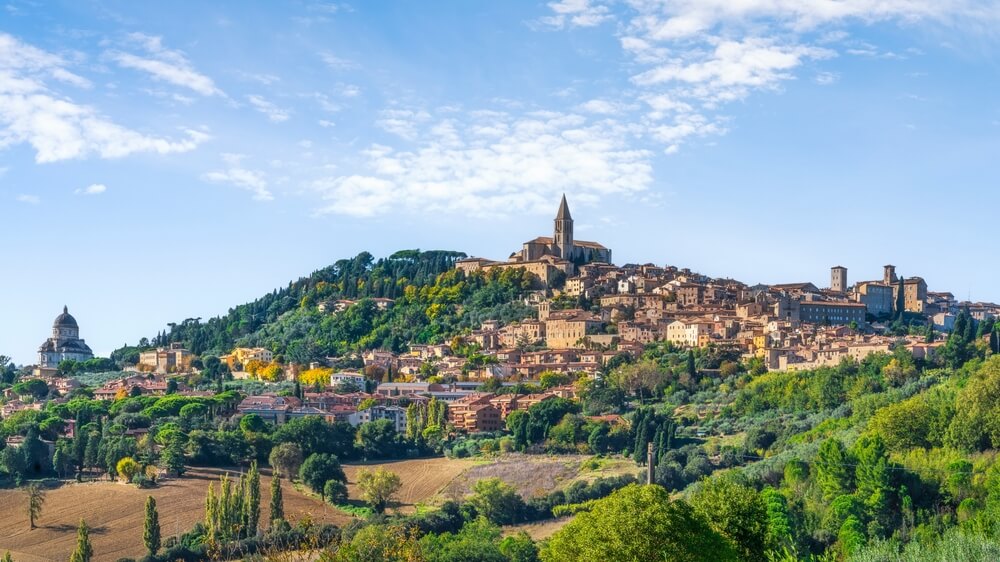
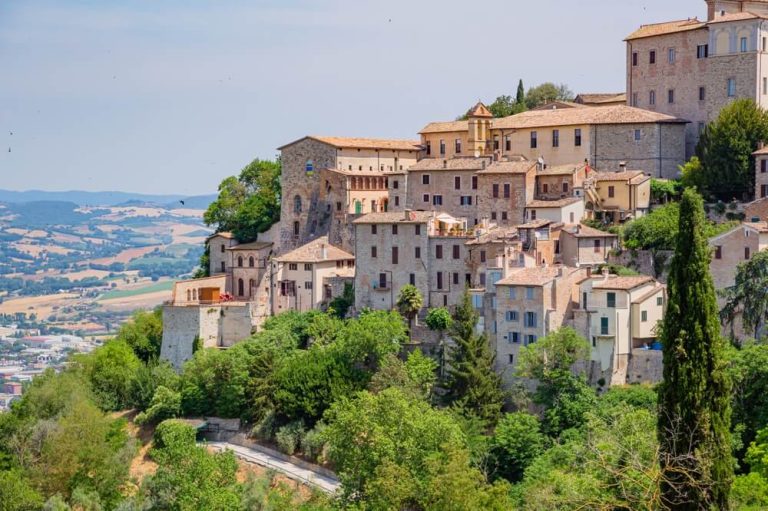
Situated in the heart of Umbria – almost equidistant between Spoleto and Orvieto – Todi is a hilltop town with a long and fascinating history. Nestled on the steep slopes of a 400 metre high hill, which sits on the banks of the River Tiber, legend has it that the founders of the city had originally planned to build Todi at the foot of the hill. However, whilst enjoying their breakfast one morning, an eagle is said to have swooped down and flew away with their blanket – discarding it over the top of the hill. It was decided that this was an omen and construction of the town instead began on the hilltop. Take a look at Todi’s coat of arms and you won’t be surprised to see that it features this legendary eagle.
Many buildings from Todi’s rich and illustrious history still survive today. Those from Roman times include the Roman basilica and Roman forum. However, to fully discover this part of Todi’s history, you also need to head underground. Below the rectangular Piazza del Popolo there are a series of 1st century Roman cisterns (cisterne Romane). These are over 80 metres long and visitors can explore them all. Originally, they were part of a rainwater drainage and storage system that would have taken water from the Roman forum down to the valley below.
One of our favourite things about Todi is how the history of the city is very clearly visible in the rings that circle the town. The innermost circle was built by the Etruscans, the middle ring by the Romans and the outermost ring by those living during the Middle Ages, a time believed to be Todi’s heyday.
Much of what you see today in Todi dates back to the Middle Ages. This is when Todi was at its most prosperous. The first and perhaps finest example of this prosperity is Todi’s 13th century Romanesque-Gothic cathedral. This is situated in the Piazza del Popolo. The facade of the Duomo is actually quite simple, however inside the interior is more impressive. Look out for Ferrau da Faenza’s copy of Michelangelo’s Last Judgement on the far wall. Just don’t expect to be too impressed by it!
The altar, designed and built by Gianncolo di Paolo, is far more impressive as is the central rose window. You need to be inside to see this at its best and ideally when the natural Umbrian light streams through. We recommend paying the small fee to head underground to explore the crypt too.
One of Todi’s finest attractions, the Piazza del Popolo, is widely acknowledged to be one of Italy’s most perfect Medieval piazzas. So is a definite must-see on your Umbria villa holiday. Also in this incredibly beautiful square are three equally impressive palaces: the Palazzo dei Priori, the Palazzo del Popolo and the Palazzo del Capitano. All three were built by the commune in an attempt to out-do the church. As a result, you’ll find them to be much more ornate than the Duomo. For those interested in learning more about the history of Todi under the Etruscans, then the Palazzo del Capitano is also home to the Museo Etrusco-Romano which contains a number of important artefacts.
Todi hosts a weekly market every Saturday in Via Menacali. This is a great time to visit if you’re a keen foodie. And every second Sunday of the month, Todi also plays host to an antiques market in Piazza del Popolo. Otherwise, the biggest annual event in Todi is the Todi festival held at the end of August and beginning of September each year. Lasting more than a week, it’s a chance to immerse yourself in theatre, music, dance, art and literature.
Alternatively, if you prefer to explore off season and are staying in an Umbria villa in the Winter months, the run up to Christmas is also a lovely time to visit Todi. The slope of the hill is lit up by a gigantic Christmas tree (although it’s not as big as the one in Gubbio!) and there are Christmas markets to get you in the festive spirit. To kick off the festive season, Todi hosts an annual market, usually on or around the 11th November. The Fiera di San Martino hosts over 100 stalls stretching from Piazzale della Consolazione to Piazza del Popolo.
Tips for navigating the city
Once you arrive in the centre of Todi, you’ll soon find that the medieval streets, elegant piazzas and panoramic viewpoints are all within easy walking distance.
Todi sits high above the Tiber Valley, and while the centre itself is relatively gentle compared to some Umbrian hill towns, you should still expect sloping streets and uneven stone paving. Wear comfortable shoes, especially if you plan to wander beyond the main piazza and into the quieter residential lanes.
Getting up into the old town is made much easier by Todi’s escalator system, which connects the lower parking areas with the historic centre. This is a real bonus, particularly in hot weather, and makes arriving by car far less daunting than you might expect.
Cyclists often pass through Todi as part of longer Umbrian routes, but the final climb into town is long and demanding. As always, the reward at the top is a beautiful town and sweeping views across the surrounding countryside.
If you’re driving, there are several convenient car parks below the historic centre, including areas near Porta Orvietana and the escalators. Be mindful of the ZTL, which is clearly signposted and strictly enforced. It’s always worth checking for any temporary restrictions during local events or market days before you arrive.
Accommodation and dining recommendations
The centre of Todi is quite compact and while you can find some hotels and B&Bs in the old town, access to Todi is so easy that we don’t think it’s necessary to stay in Todi itself to discover this wonderful Umbrian hilltop town.
Our recommendation is to opt for a villa in Umbria so you can have a base from which to explore not just Todi but also Orvieto, Spello and Spoleto which are in such easy reach of each other.
Wherever you choose to stay, we always recommend that our guests spend at least one evening in Todi. As is the case in all Umbrian towns, dinner and the preceding aperitivo definitely give the best experience in Todi. For an evening meal or a leisurely lunch, start with Osteria del Grillo, a beloved local spot tucked just off the main piazza. Despite its central location, don’t expect tourist menus. Here you’ll find Umbrian classics done with care. Think rich pastas, seasonal truffles and slow cooked meats – all paired with a thoughtful list of regional wines. The atmosphere is warm and welcoming, perfect for lingering over multiple courses and good conversation.
Another excellent choice is Ristorante Il Maiale Felice, known for its inventive approach to traditional flavours. While staying true to local ingredients, the chefs here add a creative twist that keeps every dish interesting. This is an ideal place for a slightly elevated dinner that still feels grounded in Todi’s culinary heritage.
For something more casual, we love La Cantina. Popular with locals this place offers hearty fare in a rustic setting. It’s a great pick for sampling Umbrian comfort food like strangozzi with pesto di nocciole (hazelnut pesto) or a generous antipasto board, alongside locally produced wine. The vibe is relaxed and unpretentious.
If you’re in the mood for something sweet, be sure to visit Gelateria Follie di Gusto. This artisanal gelato shop uses fresh, seasonal ingredients to create beautifully balanced flavours, from classic stracciatella to inventive fruit combinations.
Finally, for a great glass of wine or an aperitivo before dinner, we recommend Vineria San Fortunato. Cozy and atmospheric, it’s a wonderful spot to sample Umbrian reds or sparkling wines while soaking up views of Todi’s piazzas as the sun begins to set.



Ready to find your dream luxury holiday villa in Umbria?
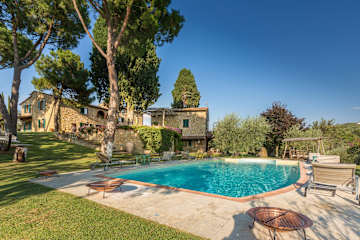
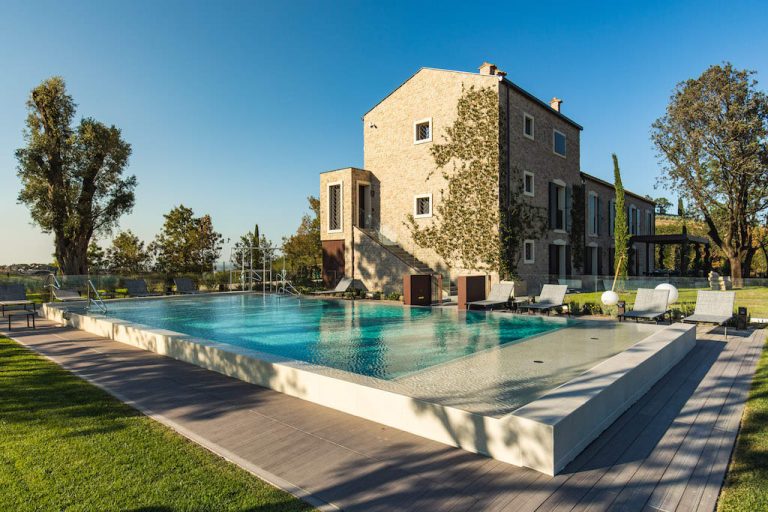
Whether you picture yourself strolling through the medieval cobblestone lanes of Assisi, sipping crisp Orvieto Classico white wine overlooking olive-draped hills, or relaxing beside your private infinity pool with sweeping views of Lake Trasimeno, your ideal Umbrian retreat is just a click away.
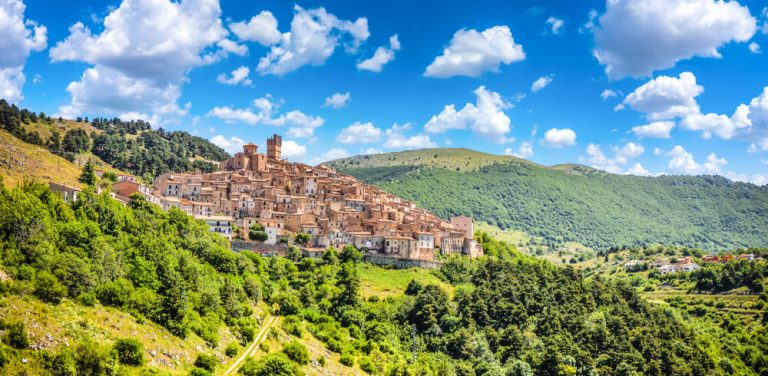
Often called the “Green Heart of Italy,” Umbria offers an authentic, unspoiled slice of Italian magic. We handpick every property to ensure your stay is exceptional. Explore our curated selection of luxury villas in Umbria today and take the first step toward your ultimate escape.
Have questions or need personalised recommendations? Contact our team, we are always happy to help!